
Anúncios
The dust settles over forgotten stones, whispering secrets of a civilization that once thrived. Ancient cities lost to time hold mysteries that continue to fascinate us.
🏛️ The Last Dawn Over Silent Streets
Imagine standing at the edge of an ancient metropolis in its final hours. The sun rises over magnificent temples and bustling marketplaces for what would be the last time. Citizens go about their daily routines, unaware that catastrophe looms on the horizon. This is the haunting reality that befell countless civilizations throughout human history—cities that vanished from collective memory, leaving only archaeological whispers of their existence.
Anúncios
The study of extinct cities offers us more than historical curiosity. These lost urban centers provide crucial insights into human resilience, environmental adaptation, and the fragility of even the mightiest civilizations. From the ash-covered streets of Pompeii to the jungle-reclaimed temples of Angkor, each abandoned city tells a unique story of triumph and tragedy.
When the Earth Trembled: Natural Disasters as Architects of Abandonment
Natural catastrophes have repeatedly rewritten the map of human civilization. Earthquakes, volcanic eruptions, tsunamis, and floods have obliterated thriving communities in moments, preserving them in time like flies trapped in amber. These sudden destructions offer archaeologists unprecedented glimpses into daily life frozen at a specific moment.
Anúncios
The volcanic eruption of Mount Vesuvius in 79 AD stands as perhaps the most famous example. Pompeii and Herculaneum were buried under meters of ash and pumice, creating a time capsule that would remain sealed for nearly seventeen centuries. The pyroclastic surge killed inhabitants instantaneously, preserving their final moments in haunting detail. Bodies transformed into hollow molds within the hardened ash, later filled with plaster by archaeologists to reveal people in their death poses—a mother shielding her child, a dog straining against its chain, a baker with loaves still in his oven.
The Gradual Silence: Drought and Climate Change
Not all extinctions arrive with dramatic fanfare. Some cities died slowly, strangled by environmental changes that made continued habitation impossible. The ancient Pueblo people of North America abandoned their elaborate cliff dwellings and urban centers throughout the Four Corners region during the late 13th century. Evidence suggests that a prolonged drought, combined with resource depletion and possibly social upheaval, made their sophisticated agricultural society unsustainable.
Similarly, the Maya civilization experienced a mysterious collapse during the 9th century. Once-magnificent cities like Tikal and Copán were gradually abandoned, their populations dispersing into smaller settlements. While theories vary, mounting evidence points to a combination of severe drought, deforestation, and resulting agricultural failure. The stone temples and pyramids remained, but the knowledge that built them scattered like seeds on sterile ground.
⚔️ Conquest, War, and the Sword’s Final Song
Military conquest has erased countless cities from the map. When Carthage fell to Rome in 146 BC, the victorious Romans allegedly plowed salt into the earth to ensure nothing would grow there again. While this detail may be apocryphal, the city’s utter destruction is historical fact. For decades, Carthage existed only as a cautionary tale and scattered ruins, its Punic culture systematically erased by its conquerors.
The Mongol invasions of the 13th century left a trail of devastated cities across Asia and Eastern Europe. Merv, once among the world’s largest and most prosperous cities, was utterly destroyed by Mongol forces in 1221. Historical accounts describe the massacre of hundreds of thousands of inhabitants. The city never recovered its former glory, and today only earthen mounds mark where magnificent buildings once stood.
The Economics of Abandonment
Trade routes shift, resources become depleted, and economic vitality drains away—sometimes the death of a city is simply a matter of economics. When the Silk Road trade networks reconfigured, cities that had prospered as vital waypoints found themselves bypassed. Palmyra in Syria, once a wealthy desert oasis and trading hub, gradually declined when trade patterns shifted and Roman influence waned.
Silver mining made Potosí in Bolivia one of the world’s wealthiest and most populous cities during the Spanish colonial period. At its peak in the early 17th century, it rivaled London and Paris in size. But as silver deposits depleted and colonial priorities shifted, the city’s population plummeted from over 200,000 to a small fraction of that number. The grand colonial architecture remains as a monument to boom-and-bust economics.
🌿 Nature’s Reclamation: When the Jungle Returns
One of the most visually striking aspects of abandoned cities is how quickly nature reasserts dominance. Tree roots crack through stone foundations, vines drape over carved monuments, and forests swallow entire urban landscapes. This process transforms human achievements into hybrid landscapes where culture and nature intertwine in unexpected ways.
Angkor in Cambodia demonstrates nature’s power to reclaim. After the Khmer Empire declined and the capital relocated, the jungle gradually enveloped the temple complexes. Massive tree roots grew through and around the stone structures, creating surreal scenes where it’s unclear whether the trees are destroying or supporting the ancient buildings. This interplay between human construction and natural growth has become iconic, featuring prominently in both archaeological documentation and popular culture.
The lost cities of the Amazon rainforest, many only recently discovered through LIDAR technology, reveal sophisticated urban planning buried beneath centuries of forest growth. These findings challenge previous assumptions about the Amazon as pristine wilderness, instead revealing it as a landscape shaped by extensive human habitation. Complex earthworks, roads, and settlements demonstrate that millions may have lived in these now-forested regions before European contact and the diseases that followed.
Archaeological Detectives: Piecing Together Final Chapters
Modern archaeologists employ increasingly sophisticated techniques to understand how and why cities died. Stratigraphy reveals the sequence of events through layered deposits. Chemical analysis of teeth and bones uncovers dietary changes that might indicate famine. Pollen samples show environmental transformations. DNA analysis reveals population movements and disease outbreaks.
The ancient city of Çatalhöyük in Turkey, one of the world’s oldest urban settlements, provides fascinating insights into early city life and abandonment. Occupied from approximately 7500 to 5700 BC, it was eventually abandoned for reasons still debated by scholars. Analysis of the site reveals a society without obvious hierarchy, where houses were entered through roof openings and the dead were buried beneath living spaces. Understanding why this unique urban experiment ended helps archaeologists comprehend the challenges of early urbanization.
Technology Revealing Hidden Cities
Satellite imagery, ground-penetrating radar, and LIDAR scanning have revolutionized how we discover and understand lost cities. These technologies allow archaeologists to identify urban patterns beneath jungle canopies, desert sands, and agricultural fields without invasive excavation.
LIDAR technology recently revealed the true scale of Maya civilization. Scanning through the forest canopy of Guatemala’s Petén region exposed over 60,000 previously unknown structures, including houses, palaces, elevated highways, and defensive fortifications. This discovery required researchers to dramatically revise population estimates upward, suggesting Maya civilization was far more extensive and interconnected than previously understood.
💀 The Human Cost: Final Moments Frozen in Time
Perhaps the most poignant archaeological discoveries are those that capture human stories from a city’s final moments. These finds transform abstract historical events into deeply personal tragedies.
At Pompeii, plaster casts reveal families huddled together, individuals caught mid-flight, and people who sought shelter in buildings that became their tombs. One famous cast shows a dog, still chained, twisted in its final agony. Another depicts what appears to be a family—two adults and two children—dying together. These images transcend their archaeological value, becoming meditation points on mortality and the randomness of disaster.
Mass graves discovered at sites of military conquest tell equally grim stories. At Hasanlu in Iran, archaeologists found skeletons of three individuals crushed beneath a collapsed building, still holding a golden bowl they were apparently trying to save. This 2,800-year-old scene captures both the violence of the city’s destruction and the very human impulse to preserve valued possessions even in the face of death.
Lessons Written in Dust and Stone
What can modern civilization learn from these echoes of extinction? The archaeological record offers sobering lessons about sustainability, resilience, and adaptation. Cities that overexploited their environments, failed to adapt to climate change, or rigidly maintained unsustainable practices eventually collapsed. Those that showed flexibility, diversified their resource bases, and maintained social cohesion had better chances of surviving crises.
The collapse of the Classic Maya civilization provides particularly relevant warnings. A sophisticated society with advanced mathematics, astronomy, and architecture failed to sustainably manage its relationship with the environment. Deforestation, soil erosion, and water management failures combined with drought to undermine agricultural productivity. Social stratification may have prevented adaptive responses, as elites pursued monument-building projects even as commoners faced resource scarcity.
Urban Vulnerability in the Modern Era
Modern cities face many of the same threats that doomed ancient predecessors: climate change, resource depletion, economic disruption, and social instability. However, we also possess advantages our ancestors lacked—global communication networks, scientific understanding of environmental systems, and the ability to learn from historical precedents.
Coastal cities worldwide face threats from rising sea levels, much like ancient settlements that were inundated by tsunamis or gradual ocean encroachment. Water scarcity challenges urban planners in regions where ancient cities collapsed due to drought. Understanding how previous civilizations failed—or occasionally succeeded—in addressing similar challenges provides valuable perspective for contemporary decision-making.
🔮 The Future of Lost Cities: Preservation and Discovery
Thousands of ancient cities remain undiscovered, their locations lost to shifting sands, dense vegetation, or rising waters. Climate change paradoxically aids discovery even as it threatens known sites. Melting glaciers reveal previously frozen archaeological sites. Drought exposes structures usually submerged beneath reservoirs. But these same forces—extreme weather, sea-level rise, and temperature fluctuations—accelerate the deterioration of fragile sites.
The archaeological community races against time to document and preserve endangered sites. Digital reconstruction technologies create virtual models of monuments threatened by conflict, neglect, or environmental degradation. When ISIS destroyed ancient Palmyra’s monuments, digital archives preserved three-dimensional records that may someday enable physical reconstruction.
Underwater archaeology explores cities submerged by rising seas or tectonic activity. Pavlopetri off the coast of Greece, Dwarka off India, and numerous settlements in the Mediterranean offer glimpses of coastal life from millennia past. As technology improves and sea levels rise, more drowned cities will likely be discovered, though accessing and preserving them presents unique challenges.
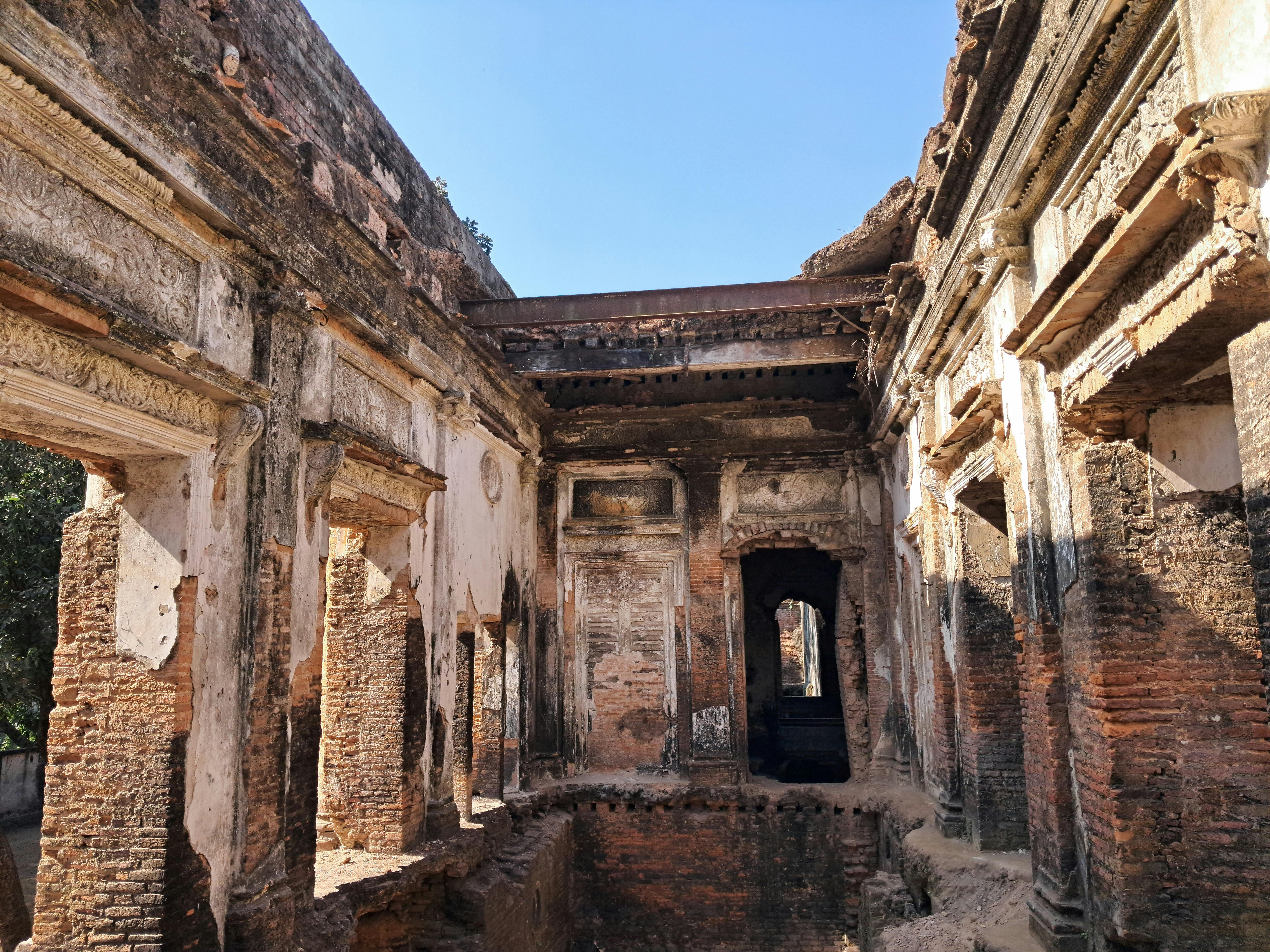
Echoing Forward: Remembering to Survive
The final moments of ancient cities continue to echo through time, speaking to us across millennia. These echoes carry warnings about hubris, environmental limits, and the impermanence of human achievements. They also testify to resilience, creativity, and the indomitable human drive to build, connect, and create meaning.
Every excavated ruin, every translated inscription, and every analyzed artifact adds detail to our understanding of how cities die and civilizations transform. This knowledge serves not merely academic curiosity but practical wisdom for navigating an uncertain future. The cities that vanished serve as both cautionary tales and inspiration—reminders of what we can lose and what we might preserve through wisdom, adaptation, and foresight.
As we face our own era’s challenges—climate disruption, resource scarcity, social fragmentation, and technological transformation—the lessons from lost cities grow ever more relevant. Will our cities echo through future millennia as cautionary tales of collapse, or as examples of successful adaptation? The answer lies not in the stones and dust of the past, but in the choices we make today. The ancient cities speak, if we’re willing to listen to their final whispers carried on the wind of time.
