
Anúncios
Throughout history, countless civilizations have risen to greatness only to vanish mysteriously, leaving behind tantalizing clues about their sophisticated societies and remarkable achievements.
The secrets of lost civilizations continue to captivate archaeologists, historians, and adventurers worldwide. These vanished societies left behind architectural marvels, advanced technologies, and cultural treasures that challenge our understanding of ancient human capabilities. From the depths of jungles to beneath desert sands, hidden wonders await discovery, promising to rewrite the narrative of human history and reveal sophisticated knowledge systems that disappeared centuries ago.
Anúncios
The fascination with lost worlds extends beyond academic curiosity. These civilizations represent pivotal chapters in humanity’s journey, offering lessons about sustainability, innovation, and the fragility of even the most powerful societies. As modern technology unveils new discoveries, we’re constantly amazed by the ingenuity and complexity of cultures once thought primitive or mythological. 🗿
The Enigmatic Disappearance of Advanced Societies
Many sophisticated civilizations vanished under mysterious circumstances that continue to puzzle researchers. The sudden abandonment of thriving cities, the loss of written languages, and the disappearance of entire populations raise profound questions about what catastrophic events or gradual declines led to their demise.
Anúncios
The Maya civilization, for instance, reached extraordinary heights in mathematics, astronomy, and architecture before many of their greatest cities were abandoned. While drought and environmental degradation played roles, the complete picture remains elusive. Similarly, the Indus Valley Civilization, with its advanced urban planning and sophisticated drainage systems, declined rapidly around 1900 BCE, leaving scholars debating whether climate change, invasion, or internal collapse caused their downfall.
These disappearances weren’t always complete extinctions. Sometimes, populations dispersed, knowledge fragmented, and cultural continuity broke down. The descendants of these civilizations often survived but lost the centralized knowledge and resources that had enabled their ancestors’ greatest achievements.
Architectural Marvels That Defy Explanation
The engineering prowess of vanished civilizations continues to astonish modern experts. These societies constructed monuments and structures using techniques that remain partially mysterious, despite our advanced understanding of physics and engineering. 🏛️
Consider the precision of Machu Picchu’s stone masonry, where massive blocks fit together so perfectly that not even a knife blade can slip between them. The Inca achieved this without mortar, metal tools, or wheel technology. Their understanding of seismic engineering allowed these structures to withstand centuries of earthquakes that would devastate modern buildings.
The megalithic structures at Puma Punku in Bolivia present another architectural puzzle. Stone blocks weighing over 100 tons were cut with such precision that they appear machine-tooled. The surfaces are flat to within fractions of a millimeter, and complex interlocking joints suggest a modular construction system of remarkable sophistication.
Hidden Underground Networks and Secret Chambers
Many lost civilizations created extensive underground complexes that served religious, defensive, or practical purposes. These subterranean wonders demonstrate advanced knowledge of geology, ventilation, and structural engineering.
The underground city of Derinkuyu in Turkey could shelter approximately 20,000 people across multiple levels extending 60 meters below the surface. This ancient refuge included living quarters, food storage, wells, ventilation shafts, and even a sophisticated air distribution system. The civilization that created it possessed remarkable organizational skills and engineering knowledge.
Similar underground networks exist worldwide, from the Hypogeum of Ħal-Saflieni in Malta to the elaborate tunnel systems beneath various Mesoamerican pyramids. These hidden spaces often contained treasures, religious artifacts, and sometimes astronomical alignments that suggest ceremonial significance.
Lost Technologies and Forgotten Knowledge Systems
Perhaps most intriguing are the technologies and knowledge that vanished along with these civilizations. Evidence suggests that ancient societies possessed sophisticated understandings of chemistry, metallurgy, medicine, and astronomy that were lost when their cultures collapsed. 🔬
The ancient Romans developed a concrete formula using volcanic ash that created structures more durable than modern concrete. The Pantheon’s massive unreinforced concrete dome has stood for nearly 2,000 years, while modern concrete structures often deteriorate within decades. The exact formula was lost during the Dark Ages and only recently has begun to be understood through scientific analysis.
Damascus steel, produced in the Near East from roughly 1100 to 1700 CE, possessed legendary strength and sharpness due to carbon nanotube structures that modern metallurgists only recently identified. The techniques for creating this superior steel were lost when the civilization that produced it declined, and despite modern technology, perfectly replicating ancient Damascus steel remains challenging.
Astronomical Knowledge Beyond Their Time
Ancient civilizations demonstrated astronomical knowledge that seems impossibly advanced for their era. They tracked planetary movements, predicted eclipses, and incorporated cosmic alignments into their monuments with remarkable precision.
The Antikythera mechanism, discovered in a shipwreck off the Greek island of Antikythera, is an ancient analog computer dating to approximately 100 BCE. This device tracked astronomical positions and predicted eclipses decades in advance using sophisticated gear systems. Nothing of comparable complexity appears in historical records for another thousand years.
The Dogon people of Mali possessed detailed knowledge about the star Sirius B, including its 50-year orbital period and invisible nature to the naked eye. They supposedly maintained this knowledge for centuries before modern telescopes confirmed these facts in the 20th century, raising questions about knowledge transmission from earlier, more advanced societies.
Writing Systems That Guard Ancient Secrets
Undeciphered scripts and lost languages represent perhaps the most frustrating barriers to understanding vanished civilizations. These writing systems contain knowledge, histories, and philosophical insights that remain locked away, tantalizingly close yet incomprehensible. 📜
The Rongorongo script of Easter Island consists of approximately 26 distinct glyphs arranged in alternating directions. Despite numerous attempts at decipherment, the meaning remains unknown. With the collapse of Easter Island’s civilization, the knowledge of reading these tablets disappeared, leaving their wisdom inaccessible.
Linear A, used by the Minoan civilization of ancient Crete, remains undeciphered despite being related to the later, deciphered Linear B script. Thousands of clay tablets bearing this writing system survive, potentially containing administrative records, religious texts, or literary works that could illuminate this sophisticated Bronze Age culture.
The Power of Oral Traditions in Preserving Lost Knowledge
Not all lost civilizations relied solely on written records. Oral traditions sometimes preserved surprisingly accurate historical information across centuries, though skeptics often dismissed these accounts as mere mythology.
Australian Aboriginal oral histories describe coastal lands now submerged by rising seas after the last ice age—events occurring over 10,000 years ago. Scientific research has confirmed these stories correspond to actual geographical features now underwater, demonstrating the remarkable accuracy of oral tradition when properly maintained across generations.
Treasures Hidden in Plain Sight
Some of the most significant discoveries about lost civilizations came from reinterpreting sites or artifacts previously dismissed or misunderstood. Modern technology, particularly LiDAR scanning and satellite imagery, reveals hidden structures obscured by vegetation or mistaken for natural features. 🛰️
In 2018, LiDAR surveys revealed that Mayan cities were far more extensive than previously believed, with interconnected urban areas supporting populations in the millions. Entire cities hidden beneath jungle canopy suddenly became visible, complete with pyramids, palaces, causeways, and defensive fortifications. This technology transformed our understanding of Mayan civilization’s scale and sophistication.
Similar techniques uncovered massive earthworks in the Amazon rainforest, demonstrating that the region supported large, complex societies before European contact. These geometric earthworks, called geoglyphs, required sophisticated surveying techniques and coordinated labor, contradicting assumptions about the Amazon as pristine wilderness untouched by human engineering.
Environmental Catastrophes and Climate Collapse
Many civilizations fell victim to environmental changes they couldn’t control or disasters they inadvertently created through unsustainable practices. These cautionary tales resonate powerfully in our current age of environmental challenges.
The Akkadian Empire, one of the world’s first multi-ethnic empires, collapsed around 2200 BCE, possibly due to a severe drought lasting over a century. Archaeological evidence shows rapid abandonment of cities and agricultural collapse. This civilization’s inability to adapt to changing climate conditions led to fragmentation and eventual disappearance.
Easter Island’s ecological collapse provides another sobering example. The islanders’ civilization flourished while forests covered the island, but deforestation for agriculture, monument construction, and transport led to soil erosion, crop failures, and societal breakdown. By the time Europeans arrived, the once-thriving culture had collapsed, and the remaining population couldn’t explain how their ancestors had erected the famous moai statues. 🗿
Lessons for Modern Civilization
These vanished societies offer crucial warnings about sustainability, resource management, and adaptability. Even technologically advanced, culturally sophisticated civilizations can collapse when they exceed environmental carrying capacity or fail to adapt to changing conditions.
The parallels to contemporary challenges are striking. Climate change, resource depletion, and environmental degradation threaten modern civilization similarly to how they undermined past societies. The difference is our ability to learn from these ancient mistakes and implement solutions before reaching catastrophic tipping points.
Ongoing Discoveries and Future Revelations
The secrets of lost civilizations continue to emerge as technology advances and new areas become accessible to researchers. Each discovery raises new questions while answering old ones, suggesting that much remains hidden beneath the earth, sea, and jungle. 🌍
Recent underwater archaeology has revealed submerged settlements and ports, evidence of civilizations claimed by rising seas or geological events. The ancient city of Dwarka off India’s coast, the submerged structures near Yonaguni in Japan, and numerous Mediterranean sites all suggest that significant archaeological treasures remain underwater, waiting for discovery.
Ground-penetrating radar, satellite imagery analysis, and artificial intelligence are revolutionizing archaeology. These technologies can identify promising excavation sites without disturbing the ground, predict where structures might exist based on subtle surface variations, and analyze vast datasets to find patterns invisible to human researchers.
The Role of Citizen Science and Technology
Modern exploration of lost civilizations isn’t limited to professional archaeologists. Citizen scientists contribute through satellite image analysis, funding excavations through crowdfunding, and using drones to survey difficult terrain. This democratization of discovery means more eyes searching for hidden wonders and more resources available for preservation.
Digital reconstruction technologies allow researchers and the public to experience lost civilizations virtually. 3D modeling recreates ancient cities as they appeared in their prime, while augmented reality applications let visitors to archaeological sites visualize structures as they once stood. These technologies preserve knowledge and inspire new generations of researchers.
Protecting Heritage While Revealing Secrets
As we uncover more about vanished civilizations, ethical questions arise about preservation, ownership, and respect for cultural heritage. The excitement of discovery must be balanced against protecting sites from looting, environmental damage, and cultural insensitivity.
Many archaeological treasures face threats from climate change, urban development, looting, and conflict. Rising seas threaten coastal archaeological sites, while warming temperatures damage organic artifacts preserved for millennia in ice or permafrost. Documenting these sites before they’re lost forever has become increasingly urgent.
International cooperation and legal frameworks help protect archaeological heritage, though enforcement remains challenging. UNESCO World Heritage designation provides some protection, but many significant sites lack adequate safeguarding. Local communities increasingly participate in preservation efforts, recognizing that these ancient treasures connect them to their ancestral heritage.
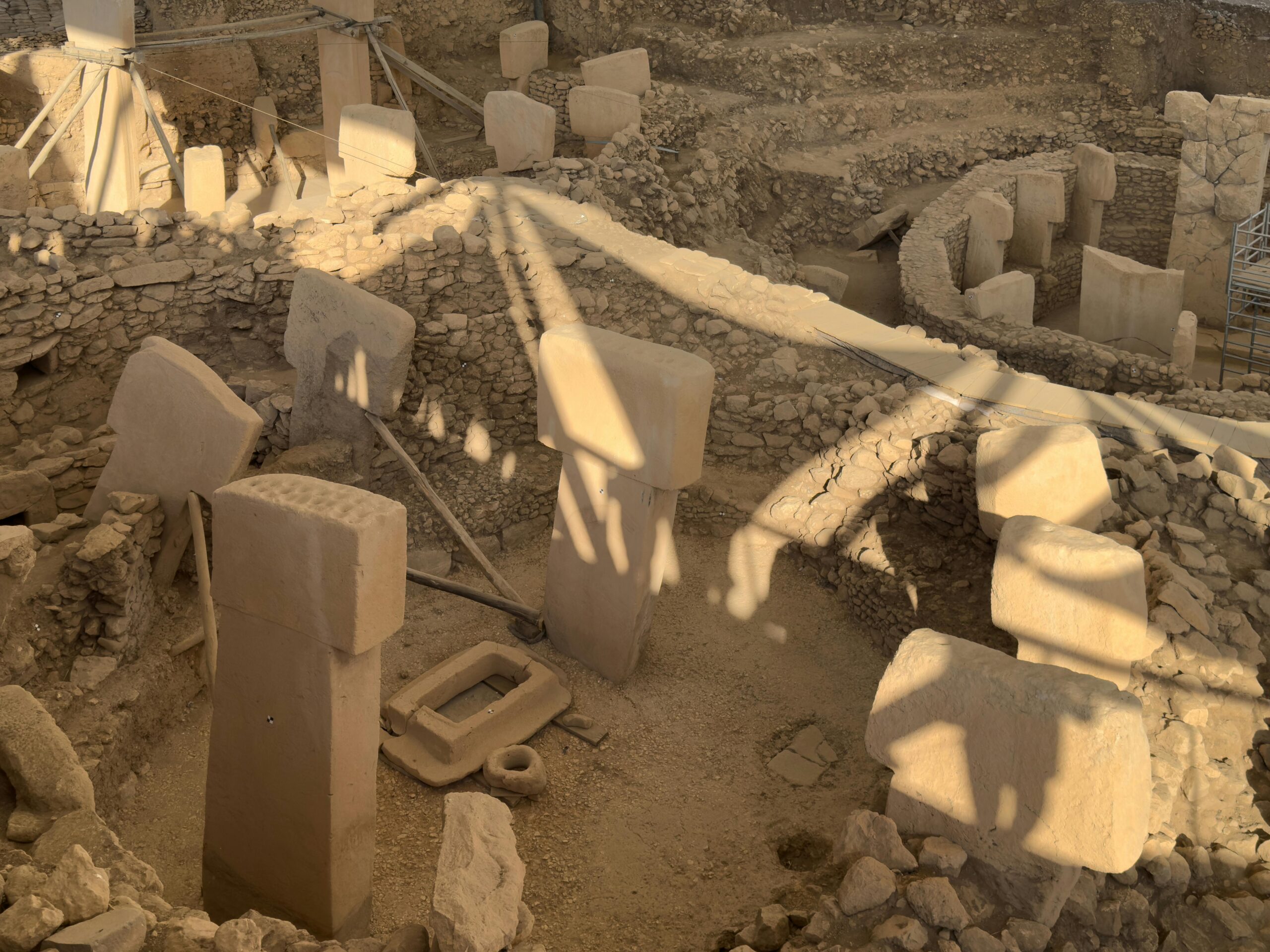
The Eternal Allure of Mystery and Discovery
The fascination with lost civilizations taps into fundamental human curiosity about our origins, capabilities, and destiny. These vanished societies remind us that nothing is permanent, that great achievements can be forgotten, and that history holds secrets still waiting to be revealed. ✨
Each discovery about ancient civilizations enriches our understanding of human potential and creativity. These societies achieved remarkable things with limited resources, demonstrating ingenuity, determination, and sophisticated knowledge systems. Their successes inspire us, while their failures warn us about hubris, unsustainability, and the fragility of complex societies.
The search for lost civilizations continues to evolve as technology advances and new areas become accessible. Undoubtedly, future generations will uncover wonders we haven’t yet imagined, answering longstanding questions while raising new mysteries. The conversation between past and present continues, with each generation adding new chapters to humanity’s ongoing story.
As we stand at our own civilization’s crossroads, facing environmental challenges and technological transformations, the wisdom of vanished societies becomes increasingly relevant. Their stories teach resilience, innovation, and the importance of sustainable practices. By learning from both their triumphs and failures, we can build a future that honors the past while creating new wonders for future generations to discover.
