
Anúncios
Throughout human history, countless deities once worshipped by millions have faded into obscurity, their names whispered only in ancient texts and crumbling temples.
The pantheons of gods that once dominated human consciousness have undergone dramatic transformations over millennia. While names like Zeus, Odin, and Ra remain familiar to modern audiences through popular culture, countless other divine beings have slipped through the cracks of collective memory. These forgotten divinities represent more than mere mythological curiosities—they embody lost worldviews, extinct cultures, and belief systems that shaped entire civilizations before vanishing into the mists of time.
Anúncios
The erasure of these gods wasn’t always a natural process of cultural evolution. Many were deliberately suppressed, their worship forbidden, their temples destroyed, and their stories rewritten or obscured. Others simply faded as the civilizations that created them collapsed, leaving behind only fragmentary evidence of their once-mighty influence. Understanding these lost deities offers us a window into the rich tapestry of human spirituality and the forces that determine which stories survive and which are consigned to oblivion.
🏛️ The Mechanisms of Divine Erasure
The disappearance of gods from human consciousness follows predictable patterns throughout history. Religious conquest stands as the primary culprit in divine erasure. When one civilization conquered another, the victors often systematically dismantled the spiritual infrastructure of the defeated people. Temples were demolished, priests were killed or converted, and sacred texts were burned. This pattern repeated itself across continents and millennia, from the Roman suppression of Carthaginian religion to the Spanish destruction of Aztec and Incan spiritual traditions.
Anúncios
Cultural assimilation represents another powerful force in the disappearance of deities. When cultures merged through trade, migration, or peaceful integration, their gods sometimes blended together in a process called syncretism. While this preserved certain divine attributes, it often meant the original deity’s distinct identity dissolved into a composite figure. The nuanced characteristics that made a god unique to a particular people became homogenized, and within a few generations, the original form was forgotten entirely.
Natural disasters and societal collapse also played their role. When civilizations fell due to plague, famine, climate change, or economic collapse, their religious traditions often died with them. If no written records survived, or if those records remained undeciphered, the gods of those peoples became archaeological mysteries rather than remembered figures of worship.
Vanished Deities of the Ancient Near East
The Ancient Near East birthed some of humanity’s earliest civilizations and their accompanying pantheons. Yet many of these divine figures have been completely forgotten outside academic circles. The Hurrian pantheon, which flourished in the region that is now northern Iraq and Syria during the Bronze Age, included dozens of deities whose names and stories have been largely lost. Teshub, the Hurrian storm god, once commanded worship across a vast territory, but today he’s unknown to the general public despite his historical significance.
The Elamite civilization of ancient Iran maintained a complex religious system centered around deities like Napirisha and Kiririsha. These gods governed the spiritual lives of millions for over two millennia, yet their mythology remains poorly understood. The suppression of Elamite religion by successive Persian empires and later Islamic conquest meant that knowledge of these deities survived only in fragmentary inscriptions that scholars are still working to fully decipher.
Even more obscure are the gods of the Kassites, who ruled Babylon for over four centuries. Their supreme deity, Shuqamuna, along with his consort Shumaliya, governed the spiritual worldview of a major Bronze Age power. Today, we know little more than their names, as the Kassites left few religious texts, and subsequent cultures showed little interest in preserving their traditions.
⚔️ European Divinities Lost to Conquest
Pre-Christian Europe hosted an extraordinary diversity of religious traditions, most of which have been completely erased. While Norse and Greek mythology survived relatively intact, countless other European pantheons disappeared almost entirely. The Thracians, who inhabited what is now Bulgaria and parts of Greece and Turkey, worshipped a complex array of deities including their horseman god, whom later Greeks identified with various of their own gods but whose original name and mythology remain mysterious.
The Dacians of ancient Romania venerated Zalmoxis, a deity associated with immortality and the afterlife. Roman conquest and subsequent Christianization obliterated most knowledge of Dacian religious practices. What little survived comes from hostile accounts by Greek and Roman writers who viewed Dacian spirituality through the lens of their own cultural prejudices.
Celtic religion, while relatively well-known in general terms, has lost the vast majority of its specific divine figures. The Celts maintained primarily oral traditions, and the Roman conquest of Celtic lands, followed by Christianization, meant most Celtic gods were forgotten. Names like Taranis, Toutatis, and Esus survived in fragmentary Roman accounts, but their full mythologies, the stories that gave them meaning to their worshippers, are lost forever. Hundreds of other Celtic deities, known only from brief inscriptions on altars and monuments, remain names without narratives.
The Erased Gods of Pre-Columbian America
The Spanish conquest of the Americas resulted in one of history’s most comprehensive religious erasures. While major Aztec and Incan deities remain somewhat known, countless regional and tribal gods were completely destroyed. The systematic burning of Mayan codices by Spanish priests meant that the detailed mythologies of hundreds of deities were lost forever. Only four Mayan codices survived, preserving a tiny fraction of a once-vast religious literature.
The Zapotec civilization of Oaxaca worshipped Cocijo, a rain deity whose cult was central to their agricultural society. Despite the Zapotecs’ sophisticated urban civilization and written language, most of their religious texts were destroyed, leaving Cocijo and the rest of their pantheon poorly understood. Scholars can reconstruct only fragments of Zapotec spirituality from architectural remains and the few documents that survived Spanish destruction.
North American indigenous religions also suffered massive erasure, though through different mechanisms. The combination of disease, forced relocation, and suppression of native spiritual practices by Christian missionaries meant that countless divine figures worshipped by tribal peoples disappeared. Many tribes went extinct before anthropologists could document their religious beliefs, taking their gods with them into oblivion.
🌏 Asian Deities Forgotten by History
Asia’s religious landscape is often characterized by the continuity of traditions like Hinduism, Buddhism, and Taoism, but this narrative overlooks the countless spiritual systems that vanished. The Indus Valley Civilization, one of humanity’s earliest urban cultures, practiced a religion about which we know almost nothing. Seals and artifacts suggest they worshipped a proto-Shiva figure and various goddesses, but without deciphered texts, we cannot know the names, stories, or attributes of their gods.
In Southeast Asia, pre-Buddhist and pre-Hindu animistic traditions worshipped local deities whose names and mythologies have been almost completely lost. The arrival of Indian religions in the region led to syncretic blending that obscured earlier spiritual traditions. While some scholars attempt to reconstruct these pre-Indian belief systems, most of the original deities have disappeared beyond recovery.
The pre-Islamic religions of Central Asia similarly vanished under the tide of religious conquest. The Sogdians, who controlled Silk Road trade for centuries, practiced Zoroastrianism mixed with local traditions that included deities unknown to mainstream Zoroastrianism. Islamic conquest eliminated these religious practices so thoroughly that we know only fragments of Sogdian spirituality from archaeological finds.
African Gods Lost to Colonialism and Conversion
Africa’s religious erasure began in ancient times and continued through colonial periods. The Nubian kingdoms of the Nile practiced their own versions of Egyptian religion with unique local deities. Arensnuphis, a Nubian god of war and hunting, had no direct Egyptian equivalent. When Christianity arrived in Nubia in the 6th century, these native gods were suppressed, and later Islamic conquest erased even the memory of Nubian Christianity itself.
The countless traditional religions of sub-Saharan Africa have suffered ongoing erasure through Christianization and Islamization. While some deities like the Yoruba orishas survived through the African diaspora and syncretism with Christianity, thousands of other African gods worshipped by smaller ethnic groups have disappeared. Colonial suppression of indigenous spiritual practices, combined with the prestige of foreign religions, led many communities to abandon their traditional deities.
The Aksumite Empire of ancient Ethiopia initially practiced a polytheistic religion before converting to Christianity. Their primary deity, Mahrem, was a war god who guided the empire’s military conquests. After Christianization, knowledge of pre-Christian Aksumite religion was actively suppressed, and today we know little about Mahrem and the other gods of this once-powerful African empire.
📜 Deciphering the Fragments: Archaeological Discoveries
Modern archaeology occasionally resurrects forgotten deities from the dust of millennia. The discovery and decipherment of ancient texts sometimes reveals gods completely unknown to previous scholarship. The Ugaritic texts, discovered in Syria in 1928, revealed the Canaanite pantheon in unprecedented detail, introducing the modern world to deities like Baal, El, and Asherah in their original context rather than through the hostile lens of Biblical texts.
Similarly, the decipherment of Linear B script revealed aspects of Mycenaean religion that had been completely forgotten. Tablets mentioned gods like Potnia (The Mistress) and divine figures that would later evolve into classical Greek deities but in forms quite different from their later versions. These discoveries demonstrated how much divine evolution and transformation occurred even within continuous cultural traditions.
Recent archaeological work in Arabia has uncovered evidence of pre-Islamic Arabian deities beyond the few mentioned in Islamic sources. Gods like Wadd, Suwā’, and Yaghūth were worshipped across the Arabian Peninsula but were deliberately obscured after the rise of Islam. Inscriptions and temple remains are slowly allowing scholars to reconstruct these lost pantheons.
The Digital Age and Divine Resurrection
Ironically, the modern era of globalization and digital information may be resurrecting some forgotten gods from obscurity. Online databases, digital archives of ancient texts, and academic collaboration across borders have made information about obscure deities more accessible than ever before. Neopagan movements sometimes adopt forgotten deities, giving them new worshippers millennia after their original cults disappeared.
This digital resurrection raises interesting questions about religious authenticity and cultural appropriation. When modern practitioners attempt to worship gods whose original contexts are poorly understood, they necessarily create something new rather than resurrecting something old. The gap of centuries or millennia cannot be bridged; too much knowledge has been permanently lost.
🔮 What Lost Gods Reveal About Human Nature
The study of forgotten deities illuminates fundamental truths about human spirituality and power. The gods we remember are often those of conquerors and dominant cultures, while the gods of the defeated and marginalized disappear. This pattern reveals how history is written by victors not just in political terms but in spiritual and mythological terms as well.
Forgotten gods also demonstrate the contingent nature of religious “truth.” Deities who commanded absolute devotion from millions, whose existence seemed self-evident to their worshippers, have vanished so completely that most people have never heard their names. This historical pattern suggests that no religious system, however dominant today, is immune to eventual obsolescence and erasure.
The diversity of forgotten pantheons reveals the extraordinary creativity of human religious imagination. Each culture crafted deities reflecting their unique environmental circumstances, social structures, and philosophical concerns. The loss of these divine figures represents an impoverishment of human cultural heritage comparable to the extinction of biological species.
Preserving What Remains: The Scholar’s Mission
Modern scholars of religion, archaeology, and anthropology work urgently to document and preserve knowledge of obscure and endangered deities. Indigenous religions still practiced today face ongoing pressure from globalization and dominant religious systems. Researchers race to record oral traditions before the last speakers of endangered languages pass away, taking their peoples’ gods with them.
Digital humanities projects now aim to create comprehensive databases of world mythology, including the most obscure deities. These efforts ensure that even if active worship disappears, at least the memory and academic knowledge of these gods survives. Such preservation represents a form of cultural justice, acknowledging that all human spiritual traditions have inherent value regardless of their current number of adherents.
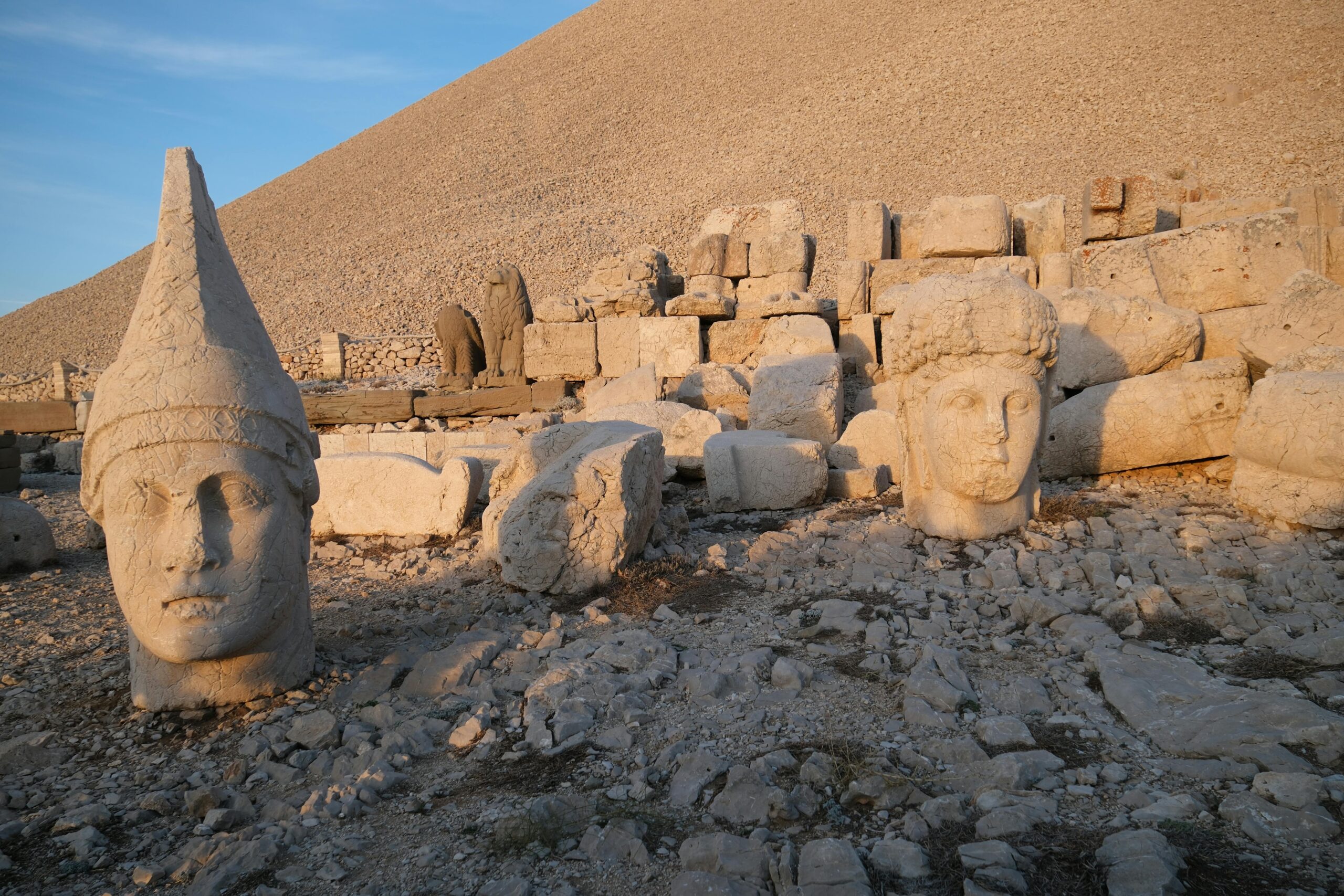
✨ The Enduring Mystery of Divine Silence
Perhaps the most haunting aspect of forgotten gods is the silence surrounding them. In temples now reduced to foundations, in languages no longer spoken, these deities once answered prayers, inspired art, justified wars, and comforted the dying. Today they cannot even tell us their own names.
Some deities survive only as questions: Who was the goddess depicted in Indus Valley seals? What stories did Kassites tell about Shuqamuna? What prayers did Celtic worshippers offer to the hundreds of gods known only from damaged altar inscriptions? These questions may never be answered. The silence of forgotten gods reminds us that most of human history remains unknown, that entire universes of meaning have been lost forever.
Yet this silence also speaks to resilience. Archaeological discoveries continue, ancient scripts are deciphered, and forgotten gods occasionally emerge from obscurity. Each resurrection, however incomplete, represents a small victory against the forces of erasure. The hidden stories of lost deities may be fragmentary, but fragments can still illuminate, can still inspire, can still connect us to our ancestors’ spiritual yearnings across vast gulfs of time.
The forgotten gods remind us that divine narratives are human narratives. They reflect our hopes, fears, values, and questions about existence. When we lose these stories, we lose part of our collective human heritage. The quest to remember the forgotten, to give voice to the silent, to resurrect the erased deities represents more than academic curiosity—it’s an act of cultural memory and human solidarity spanning millennia.
