
Anúncios
Sacred stories once shaped civilizations, guided moral compasses, and unified entire communities under shared belief systems. Today, these narratives face an unprecedented challenge in maintaining relevance.
🌍 The Erosion of Mythological Authority
Throughout human history, legends and sacred narratives served as the foundational pillars of cultural identity. These stories weren’t merely entertainment—they explained the unexplainable, provided frameworks for ethical behavior, and connected individuals to something transcendent. From Greek mythology to Indigenous creation stories, from Biblical parables to Hindu epics, these narratives possessed an authority that seemed unshakeable.
Anúncios
Yet something fundamental has shifted in our relationship with these ancient tales. The stories haven’t changed, but the world receiving them has transformed beyond recognition. The modern era, characterized by scientific rationalism, digital connectivity, and cultural pluralism, has created an environment where sacred stories struggle to maintain their traditional power and influence.
This isn’t simply about religious decline or secularization, though those factors certainly play a role. The phenomenon runs deeper, touching the very mechanisms by which humans create meaning, establish truth, and form communal bonds. The fading of legendary narratives represents a seismic shift in how we understand ourselves and our place in the cosmos.
Anúncios
📱 The Information Age and Narrative Fragmentation
The digital revolution has fundamentally altered how stories circulate and gain authority. In pre-modern societies, sacred narratives enjoyed a monopoly on explanatory power. Communities gathered around these stories, heard them repeatedly, and passed them down through carefully controlled channels—elders, priests, and designated storytellers.
Today, we’re drowning in narratives. Social media feeds deliver thousands of competing stories daily, each vying for attention and belief. The scarcity that once gave sacred stories their power has evaporated. When everyone has a platform and every perspective can find an audience, traditional legends lose their privileged position.
This narrative abundance creates what researchers call “story fatigue.” When faced with infinite options, people develop filtering mechanisms that favor novelty, personal relevance, and emotional immediacy over traditional authority. Ancient legends, no matter how profound, struggle to compete with content algorithmically optimized for engagement.
The Attention Economy’s Impact
Sacred stories traditionally demanded sustained attention and contemplation. Understanding the layers of meaning in a parable or myth required patience, reflection, and often guidance from those versed in interpretation. These narratives revealed their wisdom slowly, rewarding repeated engagement.
The modern attention economy operates on entirely different principles. Content succeeds by capturing attention instantly and holding it briefly before users scroll to the next stimulus. This environment is hostile to the deep, slow engagement that sacred stories require. Legends that once captivated audiences for hours are now summarized in tweet-length fragments, stripped of context and nuance.
🔬 Scientific Worldview and the Literal Interpretation Problem
The rise of scientific thinking has created unique challenges for sacred narratives. Science offers testable, verifiable explanations for phenomena that ancient stories addressed through metaphor and symbolism. We know lightning isn’t thrown by angry gods, that diseases aren’t divine punishments, and that the Earth wasn’t created in six literal days.
The problem isn’t that science disproves sacred stories—many believers successfully integrate both—but that modernity has fostered a literalist mindset that misunderstands how these narratives were intended to function. When sacred stories are read as scientific or historical accounts, they inevitably fail by those standards.
Ancient audiences understood myths differently than modern readers often do. They recognized these stories as vehicles for deeper truths—psychological, spiritual, and moral insights that transcended literal factuality. A creation myth wasn’t necessarily claiming to be a physics textbook; it was addressing questions of meaning, purpose, and human nature.
The Symbolic Language Crisis
Modern education emphasizes literal, analytical thinking. This serves us well in many domains but leaves us ill-equipped to engage with symbolic language. When contemporary readers encounter dragons, floods, or miraculous births, they often get stuck on whether these events “really happened” rather than asking what they mean.
This interpretive crisis leaves sacred stories vulnerable to two equally destructive responses: fundamentalist literalism that insists on factual accuracy in defiance of evidence, and dismissive skepticism that rejects the entire narrative as primitive superstition. Both responses miss the sophisticated meanings embedded in these legends.
🌐 Cultural Pluralism and the Relativization of Truth
Globalization and mass migration have created unprecedented cultural mixing. Most people now regularly encounter multiple belief systems, each with its own sacred stories and truth claims. This exposure has profound effects on how individuals relate to their own traditions.
When you grow up knowing that billions of people believe completely different sacred narratives, each claimed as ultimate truth, a certain relativism becomes almost inevitable. If Muslims, Christians, Hindus, Buddhists, and Indigenous peoples all possess elaborate, beautiful, profound sacred stories, how can any single tradition claim exclusive access to truth?
This pluralism can enrich understanding and foster tolerance, but it also undermines the absolute authority that sacred stories once commanded. Legends become “our story” rather than “the story”—valuable as cultural heritage, perhaps, but not as universal truth. This shift fundamentally changes their power and function.
The Marketplace of Meaning
Modernity has transformed spirituality into a consumer choice. People browse religious traditions like shoppers comparing products, mixing elements from different systems into personalized spiritual paths. While this freedom appeals to individualist values, it further erodes the communal, authoritative nature of sacred stories.
When legends become optional resources in a spiritual marketplace rather than binding narratives for entire communities, they lose a crucial dimension of their power. Sacred stories derive strength from being shared, from knowing that your neighbors understand the same references and accept the same foundational truths.
💔 The Disconnect Between Ancient Context and Modern Life
Sacred stories emerged from specific historical and cultural contexts—agricultural societies, monarchical governments, patriarchal family structures, and worldviews we no longer share. Many modern listeners find these narratives alien or even offensive when evaluated by contemporary ethical standards.
Stories that celebrate conquest, mandate gender hierarchies, or prescribe punishments we now consider barbaric create cognitive dissonance. Progressive believers engage in sophisticated reinterpretation, while conservatives defend traditional readings, but both approaches acknowledge an uncomfortable gap between ancient text and modern values.
This cultural distance extends beyond ethics to basic life circumstances. How does a creation myth resonate in an era when we’ve photographed the Earth from space? What meaning does a liberation narrative hold for people who’ve never experienced political bondage? The experiential disconnect makes these stories feel remote and abstract.
📖 When Institutions Lose Credibility
Sacred stories have traditionally been mediated through institutions—churches, temples, and religious hierarchies that interpreted, preserved, and transmitted these narratives. As these institutions have lost credibility through scandals, political entanglements, and resistance to social change, the stories they carry have suffered collateral damage.
Younger generations particularly show declining trust in traditional religious institutions. When the messengers lose authority, their messages become suspect. Even individuals who find value in sacred stories often seek them outside traditional channels, accessing texts directly or through alternative spiritual teachers.
This disintermediation has mixed effects. It democratizes access and enables fresh interpretations, but it also removes the communal context and expert guidance that help these complex narratives reveal their depths. A Buddhist sutra read alone as self-help literature functions differently than when studied within a lineage of teaching and practice.
🎭 Entertainment Culture and the Trivialization of the Sacred
Modern entertainment culture freely appropriates sacred narratives, transforming them into content. Greek gods become superhero franchises, Biblical stories inspire disaster films, and mythological creatures populate fantasy games. This pop culture engagement introduces ancient legends to new audiences but often strips them of sacred significance.
When Thor appears as a Marvel character or the Flood narrative becomes a special effects spectacle, these stories enter the realm of fiction and entertainment. They’re enjoyed for thrills rather than contemplated for wisdom. The boundary between sacred legend and fictional story blurs until distinction becomes meaningless.
This cultural appropriation can seem disrespectful to those who still hold these narratives as sacred. Yet it also reveals something about modern consciousness—our hunger for mythic stories persists, but we’ve relocated them from the temple to the cinema, from ritual to entertainment.
🌱 Are New Legends Being Born?
If traditional sacred stories are fading, what’s replacing them? Some argue that modernity hasn’t eliminated our need for legends but has redirected it into new forms. Science fiction explores cosmological questions once addressed by creation myths. Superhero narratives examine moral dilemmas and heroic transformation. Self-help literature offers guidance for ethical living.
These modern narratives serve some functions of traditional sacred stories, but they typically lack several key elements. They’re explicitly fictional rather than revealed truth. They’re created by known authors for commercial purposes. And they don’t unite communities under shared belief systems or provide frameworks for ritual practice.
Nevertheless, certain narratives have achieved quasi-sacred status in modern culture. The American Dream functions as a kind of civic religion. Scientific progress serves as a redemption narrative for many. Environmental stories about humanity’s relationship with nature echo ancient themes of harmony and violation.
Technology as the New Mythology
Perhaps nowhere is the emergence of new legends more visible than in technology culture. Silicon Valley has generated its own mythology—stories of garage startups, disruptive innovation, and technological salvation. These narratives promise transcendence through artificial intelligence, immortality through life extension, and utopia through proper application of technology.
These technology myths exhibit structures familiar from ancient legends: heroes and villains, trials and transformations, apocalyptic warnings and utopian promises. They address fundamental questions about human potential and destiny. Yet they remain rooted in material progress rather than spiritual transcendence, reflecting modernity’s reorientation of ultimate concerns.
🔥 What’s Lost When Legends Fade
The declining power of sacred stories represents more than religious change—it marks a transformation in human consciousness and social organization. These narratives provided several functions that remain unfulfilled in their absence.
Sacred stories created shared symbolic languages that unified diverse individuals into coherent communities. They provided tested frameworks for navigating life’s challenges—grief, injustice, suffering, mortality. They connected individuals to lineages stretching back through generations, creating a sense of participation in something larger than oneself.
The legends also preserved hard-won wisdom about human nature and social dynamics. Folded into apparently simple stories were sophisticated insights about psychology, ethics, and the consequences of choices. This wisdom wasn’t always articulated explicitly, but it shaped cultures’ intuitions about right action and meaningful life.
The Crisis of Meaning
Perhaps most significantly, sacred stories addressed the meaning question—why existence matters, what makes life worth living, how to face inevitable suffering and death. As these narratives fade without adequate replacement, many experience what Viktor Frankl called the “existential vacuum”—a sense of meaninglessness despite material comfort.
Rising rates of anxiety, depression, and suicide in affluent societies suggest that prosperity alone doesn’t satisfy human needs for purpose and significance. Sacred stories once provided ready-made answers to meaning questions. Their absence forces individuals to construct personal meanings without cultural templates, a task many find overwhelming.
🌟 Possibilities for Revival and Reinterpretation
The fading of sacred stories isn’t necessarily irreversible or entirely negative. Throughout history, religious traditions have experienced renewal movements that reinterpret ancient narratives for new contexts. This process might be happening again, though in less visible ways than traditional revivals.
Scholars and practitioners are developing new interpretive approaches that honor both ancient wisdom and modern knowledge. Psychologists mine myths for insights into the unconscious. Environmentalists rediscover ecological wisdom in Indigenous stories. Contemplatives use traditional narratives as meditation objects rather than historical claims.
These reinterpretations acknowledge that sacred stories contain multiple layers of meaning. A creation narrative can be simultaneously understood as pre-scientific cosmology, poetic expression of wonder, psychological map of consciousness development, and ethical framework for relating to the world. Reading for only one layer impoverishes these rich texts.
The Personal Mythology Movement
Some psychologists and spiritual teachers encourage individuals to engage with traditional sacred stories as resources for creating personal mythologies—narrative frameworks that organize one’s life story and provide meaning. This approach treats legends as living texts that each generation must reinterpret, rather than as fixed doctrines requiring belief or rejection.
This individualized engagement preserves some functions of sacred stories while acknowledging modern pluralism and autonomy. However, it sacrifices the communal dimension that gave these narratives much of their power. A personal mythology doesn’t unite communities or create shared symbolic languages.
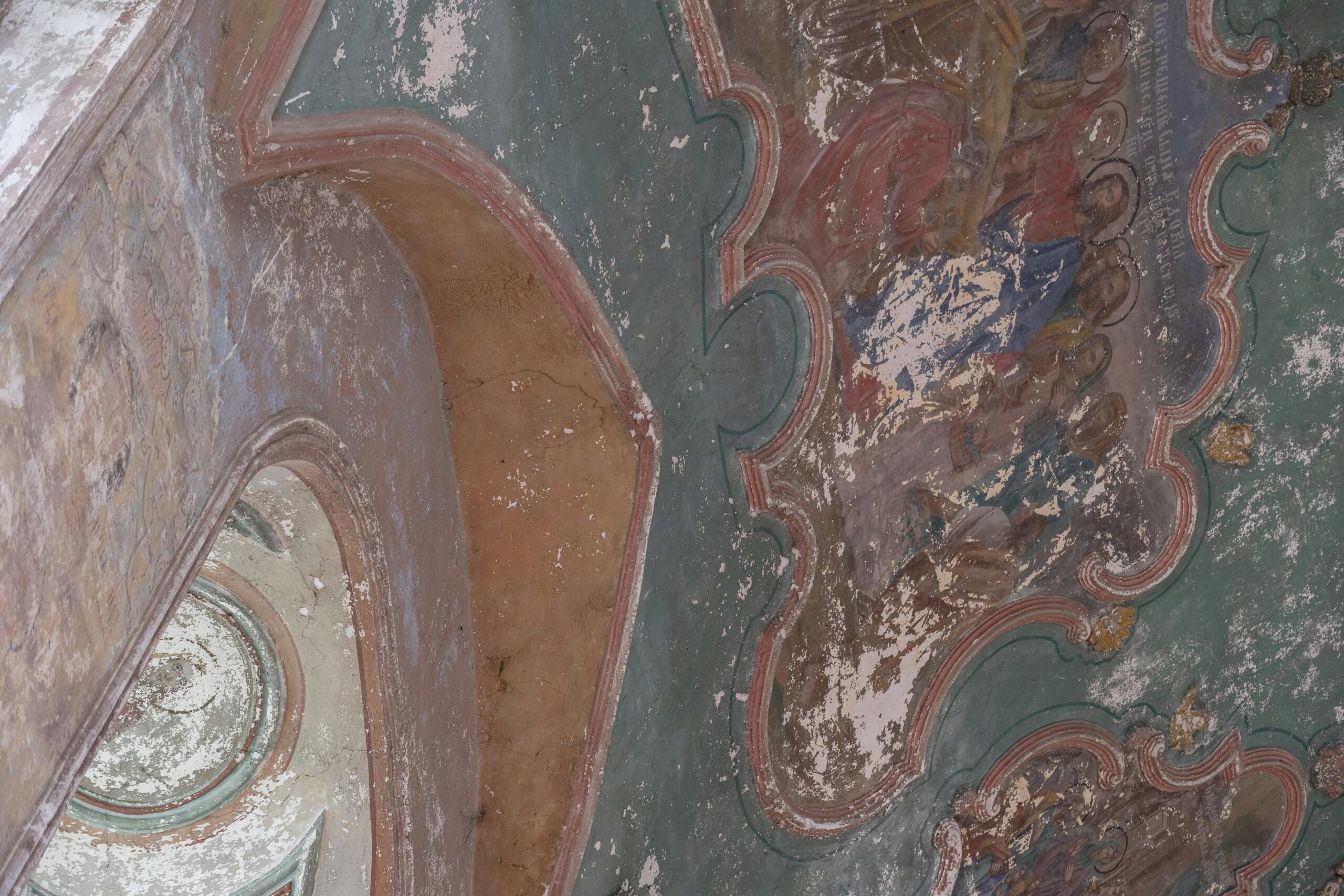
🕊️ Finding Sacred Stories in a Secular Age
The challenge facing modernity isn’t simply preserving ancient legends but discovering how sacred narratives can function in radically changed circumstances. This requires neither fundamentalist resistance to change nor dismissive abandonment of tradition, but rather creative engagement that honors both heritage and present reality.
Some religious communities are successfully navigating this balance, finding ways to maintain connection to traditional stories while reinterpreting them for contemporary contexts. They recognize that the power of sacred narratives lies not in their literal factuality but in their ability to orient lives toward meaning, connection, and transcendence.
For others, the path forward involves creating new narratives that serve sacred functions for modern consciousness—stories that address ultimate questions, unite communities, and provide ethical frameworks while remaining consistent with scientific understanding and pluralistic values.
Whether through revival, reinterpretation, or new creation, the human need for sacred stories persists. We remain meaning-making creatures who organize experience through narrative. The question isn’t whether we’ll have legends, but what stories will shape our collective imagination and guide our choices in the centuries ahead.
The fading of traditional sacred stories marks the end of an era, certainly, but perhaps also the beginning of a new chapter in humanity’s eternal quest to understand itself through storytelling. These legends haven’t lost all power—they’ve simply entered a period of transformation whose outcome remains uncertain but full of possibility.
