
Anúncios
In the twilight of great empires, when monuments crumble and languages fade, there emerges a singular figure: the last chronicler, tasked with preserving what civilizations fought to build.
🏛️ The Sacred Duty of Memory Preservation
Throughout human history, civilizations have risen to unprecedented heights before falling into obscurity. The Maya, the Roman Empire, the Kingdom of Kush—each left behind fragments of their existence. But what happens when only one person remains who can read their script, speak their tongue, or understand their customs?
Anúncios
The last chronicler represents more than a historical curiosity. This individual becomes the living bridge between a vanished world and our present reality. They carry the weight of entire peoples on their shoulders, knowing that when they pass, irreplaceable knowledge disappears forever.
Consider the urgency: approximately 40% of the world’s estimated 7,000 languages are endangered, with many having fewer than 1,000 speakers. Behind each linguistic extinction lies the loss of unique philosophical perspectives, scientific knowledge, and cultural wisdom accumulated over millennia.
Anúncios
Guardians Between Worlds: Historical Examples of Last Chroniclers
History provides us with poignant examples of individuals who found themselves as civilization’s final witnesses. These figures dedicated their remaining years to documenting what would otherwise vanish completely.
The Final Scribes of Ancient Scripts
When archaeologists discovered the Rosetta Stone in 1799, they unlocked Egyptian hieroglyphics through its trilingual inscription. But before this breakthrough, there had been a last generation of priests who could still read the sacred characters. They watched as their temples closed, their religion was suppressed, and their written legacy became incomprehensible to successive generations.
Similarly, Mayan glyphs remained mysterious for centuries after Spanish colonization. The last individuals fluent in the complete writing system took their knowledge to the grave, creating a cultural black hole that scholars are still working to fill.
Ishi: The Last of His People
Perhaps no story illustrates this tragedy more powerfully than that of Ishi, who emerged from the California wilderness in 1911 as the last surviving member of the Yahi people. He spent his final years working with anthropologists, documenting his people’s language, customs, and technologies.
Ishi’s recordings and demonstrations preserved knowledge of hunting techniques, tool-making, and survival skills developed over thousands of years. Yet the immense loneliness of being the sole survivor of an entire culture must have been crushing.
📜 What Gets Lost When Civilizations Fall Silent
The disappearance of a civilization’s records extends far beyond historical curiosity. When the last chronicler dies without passing on their knowledge, humanity loses multiple dimensions of understanding.
Scientific and Medical Knowledge
Ancient civilizations often possessed sophisticated understanding of their local environments. Indigenous peoples developed detailed taxonomies of plants and animals, discovered medicinal properties of local flora, and created agricultural techniques perfectly adapted to specific ecosystems.
The Sumerians documented thousands of medicinal recipes on clay tablets. Traditional Chinese medicine preserved treatments across millennia. When these knowledge systems disappear, we lose potentially valuable insights that could inform modern medicine and sustainability practices.
Philosophical and Spiritual Frameworks
Each civilization develops unique ways of understanding existence, morality, and human purpose. The loss of these perspectives impoverishes our collective philosophical heritage.
Consider how much poorer Western philosophy would be without access to Greek thinkers, or how our understanding of governance would suffer without Chinese political philosophy. Now multiply that loss across dozens of civilizations whose complete worldviews vanished.
Technological Innovations
Some ancient technologies remain mysterious or impressive even by modern standards. Roman concrete that strengthens over centuries, Damascus steel with its legendary strength, Greek fire that burned on water—these represent lost knowledge that modern science struggles to replicate.
The last craftspeople who understood these processes took critical details to their graves, leaving us with artifacts we can analyze but not fully reproduce.
The Psychology of Being the Last
Imagine carrying the psychological burden of being your entire civilization’s final representative. The emotional weight would be extraordinary, combining grief, responsibility, and existential isolation.
Last speakers of languages report feelings of intense loneliness—there’s no one with whom they can share the nuances and poetry of their mother tongue. Jokes don’t translate. Proverbs lose their punch. Entire categories of thought become incommunicable.
The Urgency of Documentation
Last chroniclers face an impossible race against time. There’s too much to record and too little time remaining. They must prioritize: Should they document religious practices or agricultural techniques? Mythology or governance systems? Every choice means something else remains unrecorded.
This urgency often intensifies when chroniclers recognize that younger generations show little interest in traditional knowledge, viewing it as irrelevant to modern life. The generational discontinuity makes the individual chronicler’s role even more critical.
🔍 Modern Tools for Ancient Memory
Today’s last chroniclers have unprecedented technological resources for preservation. Digital recording, 3D scanning, and artificial intelligence offer new possibilities for capturing endangered cultural knowledge.
Digital Archives and Language Documentation
Organizations like the Endangered Languages Project create comprehensive digital archives of threatened languages. High-quality audio and video recordings capture not just words but pronunciation, rhythm, and gesture—elements that written transcription alone cannot preserve.
These projects race against time, seeking out elderly speakers who remember traditional songs, stories, and linguistic structures before they pass away.
Artificial Intelligence and Pattern Recognition
Machine learning algorithms now assist in deciphering ancient scripts. By analyzing patterns across large datasets, AI can propose translations for languages that have resisted traditional decryption methods.
Recent breakthroughs in Linear A, an ancient Minoan script, were aided by computational approaches that identified structural patterns human researchers had missed. While AI cannot replace human understanding, it provides powerful tools for unlocking forgotten knowledge.
Contemporary Civilizations on the Brink
The phenomenon of last chroniclers isn’t confined to ancient history. Today, numerous indigenous cultures face the same existential threat, their knowledge systems endangered by globalization, economic pressure, and cultural assimilation.
Small Indigenous Communities
Across the Amazon, Siberia, Southeast Asia, and the Pacific Islands, small communities maintain unique languages and knowledge systems. Many have just a handful of fluent speakers, often elderly individuals who learned traditions before modern education systems introduced dominant languages.
These communities possess irreplaceable environmental knowledge. Their understanding of local ecosystems, seasonal patterns, and sustainable resource management developed through countless generations of careful observation.
Diasporic Communities and Cultural Continuity
Migration and conflict create another category of potential last chroniclers. When communities are displaced or scattered, traditional practices that required specific contexts or communal participation become impossible to maintain.
Refugee communities often contain individuals who remember traditional crafts, ceremonies, and oral histories that younger, diaspora-born generations never learned. These living bridges to homeland cultures carry knowledge that may not survive another generation.
⚡ The Ethical Dimensions of Cultural Preservation
Documenting endangered cultures raises complex ethical questions. Who has the right to record and share cultural knowledge? How should sacred or restricted information be handled? What happens when preservation efforts conflict with community wishes?
Consent and Ownership
Not all knowledge is meant to be shared publicly. Many cultures have restricted knowledge—stories, ceremonies, or practices that only certain individuals should access based on initiation, gender, or social role.
Well-meaning preservation efforts can violate these restrictions, essentially colonizing knowledge systems by extracting information and making it publicly available against traditional protocols.
Living Cultures Versus Museum Specimens
There’s tension between documenting cultures for preservation and supporting living communities to maintain traditions naturally. The ideal isn’t to freeze cultures in archives but to create conditions where they can continue evolving organically.
This means addressing economic inequities, supporting language education, and creating spaces where traditional knowledge remains practically relevant rather than merely historically interesting.
Learning From Loss: What Last Chroniclers Teach Us
The phenomenon of last chroniclers offers profound lessons about cultural fragility, the nature of knowledge, and our collective human heritage.
Nothing Is Permanent Without Transmission
Civilizations don’t preserve themselves automatically. Every generation must actively choose to transmit knowledge to the next. Disruption of this transmission—through conquest, epidemic, forced assimilation, or simply changing priorities—can break chains of knowledge thousands of years old.
The last chronicler represents the final link in a chain that has snapped. Their existence reminds us that cultural continuity requires conscious, sustained effort.
Diversity as Intellectual Resource
Each lost culture represents a unique experiment in human possibility—a distinct way of organizing society, understanding nature, or finding meaning. This diversity isn’t just sentimentally valuable; it’s pragmatically important.
Future challenges may require solutions that departed civilizations had already discovered. Agricultural techniques adapted to climate extremes, social structures that fostered cooperation, philosophical frameworks that promoted environmental stewardship—we can’t know what lost knowledge might prove valuable until we face problems it could have solved.
🌍 Becoming Chroniclers for Our Own Age
In an era of rapid technological and social change, we’re all potentially chroniclers of practices, technologies, and ways of life that may soon disappear. The grandfather who remembers pre-digital craft techniques, the grandmother who knows traditional recipes, the elder who remembers neighborhood communities before social media—all carry knowledge worth preserving.
Personal Responsibility for Cultural Memory
We don’t need to wait for official preservation projects. Recording family stories, documenting traditional practices, and maintaining cultural languages within our own communities contributes to the broader work of cultural preservation.
Simple actions matter: recording elders telling stories, writing down recipes with traditional preparation methods, photographing craftwork processes, or maintaining family languages with children.
Supporting Systematic Preservation Efforts
Organizations working on language documentation, cultural preservation, and indigenous rights need support—financial, political, and social. Their work prevents future last chroniclers by keeping cultural transmission active and vibrant.
Supporting these efforts acknowledges that human diversity isn’t just about biological variation but about the rich tapestry of ways we’ve learned to be human across different environments and histories.
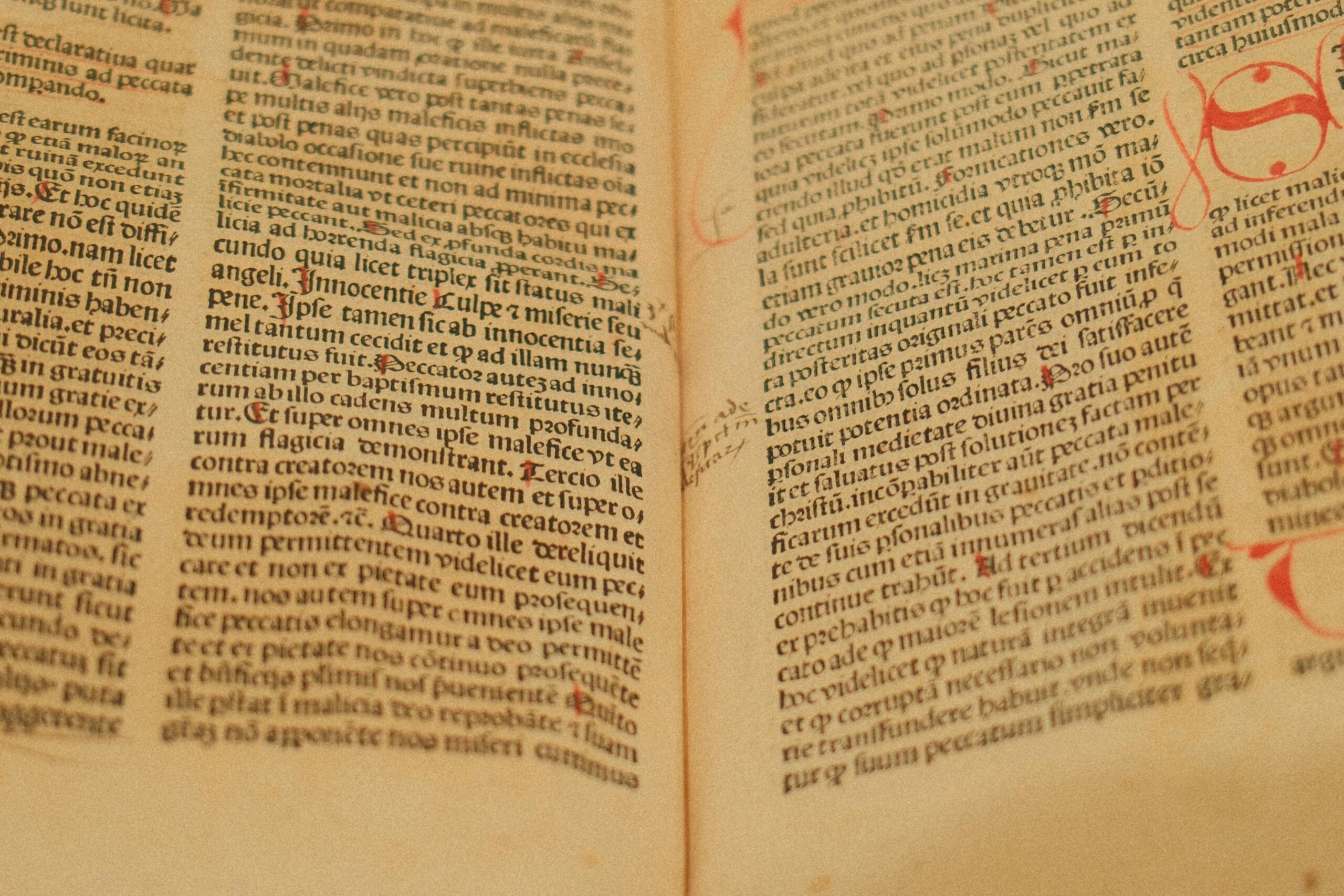
The Weight of the Final Word
The last chronicler carries an impossible burden—to speak for an entire civilization, to represent countless generations, to preserve what cannot be fully preserved. They face the heartbreak of knowing their death means a permanent silence, an irreplaceable voice falling quiet forever.
Yet their dedication reveals something profound about human nature: the drive to preserve, to remember, to pass on what we’ve learned and valued. Even when continuation seems impossible, the last chronicler documents, records, and teaches, hoping that fragments of their civilization might inform and enrich future generations.
This impulse—to create bridges across the abyss of forgetting—represents one of humanity’s most noble characteristics. It acknowledges that we are custodians of knowledge larger than our individual lives, participants in conversations spanning millennia.
As we navigate our rapidly changing world, the figure of the last chronicler should haunt us productively, reminding us that nothing endures without active preservation. Every tradition, every language, every unique cultural perspective exists precariously, dependent on conscious transmission from one generation to the next.
The question becomes not whether we’ll have last chroniclers—cultural change ensures we will—but whether we’ll listen to them while we still can, learn from them while they remain, and carry forward what they’ve struggled to preserve.
In honoring the last chroniclers of vanished empires, we commit ourselves to preventing more such losses, to supporting endangered cultures, and to recognizing that human diversity represents irreplaceable wealth. Their stories of dedication against impossible odds inspire us to become better stewards of our collective human heritage. 📚
