
Anúncios
The cosmos has always danced on the edge between order and disorder, a delicate balance that shapes existence itself and defines our understanding of reality.
🌌 The Fragile Architecture of Reality
Throughout human history, we’ve witnessed civilizations rise and fall, systems crumble, and worlds transform in ways that challenge our fundamental understanding of permanence. The collapse of creation into chaos isn’t merely a philosophical concept—it’s a recurring pattern woven into the very fabric of existence. From the heat death predicted by thermodynamics to the mythological tales of cosmic destruction and rebirth, humanity has long grappled with the terrifying yet fascinating prospect of reality unraveling.
Anúncios
Our universe operates on principles that seem contradictory at first glance. On one hand, we observe incredible order: galaxies spinning in mathematical precision, DNA replicating with extraordinary accuracy, and natural laws that appear immutable. On the other, entropy constantly works to break down these structures, dissolving complexity back into simplicity, transforming organized systems into randomness.
This tension between creation and chaos defines not only our physical universe but also our social structures, psychological states, and the entire human experience. When we examine moments of historical collapse—the fall of Rome, the Bronze Age collapse, or more recent systemic failures—we find patterns that mirror cosmic principles operating at human scales.
Anúncios
The Physics of Unraveling 🔬
From a scientific perspective, the second law of thermodynamics dictates that entropy—disorder—always increases in a closed system. This fundamental principle means that the universe is constantly moving from states of higher organization to lower organization. Stars burn out, mountains erode, and even the protons in atoms may eventually decay given enough time.
Yet this isn’t the complete story. Before stars die, they forge heavy elements in their cores. Before mountains erode completely, their sediments form new geological structures. The universe doesn’t simply collapse into homogeneous chaos—it creates new patterns, new complexities, new forms of order emerging from the ruins of the old.
Phase transitions in physics provide a compelling metaphor for how worlds unravel and transform. Water doesn’t gradually become ice; it reaches a critical threshold where its entire molecular structure reorganizes instantaneously. Similarly, social systems, ecological networks, and even psychological states can reach tipping points where rapid, comprehensive transformation becomes inevitable.
Complexity Theory and Critical Thresholds
Modern complexity science has revealed that systems operating far from equilibrium—like our biosphere, economies, and cultures—exhibit surprising behaviors. They can maintain stability for extended periods, absorbing shocks and adapting to changes. However, when stressed beyond certain thresholds, they can collapse suddenly and completely.
These critical transitions share common characteristics across vastly different systems:
- Increased fluctuations and volatility before collapse
- Slower recovery from disturbances as the tipping point approaches
- Emergence of alternative stable states after transformation
- Path dependence where small changes can determine radically different outcomes
- Hysteresis effects making it difficult or impossible to return to previous states
Historical Echoes of Cosmic Collapse 📜
Human history provides abundant examples of worlds unraveling—not in the cosmic sense, but in ways that felt equally apocalyptic to those who lived through them. The Bronze Age collapse around 1200 BCE saw the simultaneous failure of multiple interconnected civilizations across the Mediterranean and Near East. Complex societies with writing systems, trade networks, and sophisticated technologies vanished within a generation.
What’s instructive about these historical collapses isn’t just that they happened, but what emerged afterward. The Dark Ages that followed the Bronze Age collapse eventually gave rise to classical Greek civilization, democracy, philosophy, and cultural achievements that shaped Western civilization for millennia. The destruction of the old world created space for radically new social, political, and cultural configurations.
The fall of Rome similarly unleashed chaos across Europe, with political fragmentation, economic disruption, and social upheaval. Yet this collapse also liberated diverse cultural expressions previously suppressed by imperial homogeneity, planted seeds for the eventual Renaissance, and redistributed power in ways that would eventually lead to modern nation-states and democratic governance.
🧠 Psychological Worlds Coming Apart
The unraveling of worlds isn’t confined to physical or social realms—it happens within individual consciousness as well. Psychologists recognize that personal identity and worldview can undergo catastrophic transformations during crisis periods. What Jung called the “dissolution” phase of individuation involves the collapse of previous self-concepts to make room for more authentic, integrated identity.
Trauma, whether individual or collective, creates ruptures in the narrative continuity we use to make sense of experience. When someone says “my world fell apart,” they’re describing a genuine phenomenological collapse—the disintegration of the meaning-making structures that previously organized their reality. This can be devastating, but it’s also potentially transformative.
The concept of ego death in various spiritual traditions describes an even more profound unraveling—the temporary dissolution of the boundaries between self and other, subject and object. Those who’ve experienced this report that their previous reality structure completely collapsed, only to be reconstituted in fundamentally different ways, often with expanded awareness and altered value systems.
The Creative Potential of Personal Chaos
Modern therapeutic approaches increasingly recognize that psychological breakdowns can be breakthroughs in disguise. The chaos of depression, anxiety, or existential crisis often signals that outdated psychological structures no longer serve us. The discomfort we experience is the friction of reality demanding we evolve beyond limiting beliefs and patterns.
This perspective reframes suffering not as something to merely eliminate, but as potential energy for transformation. The greater the unraveling, the more complete the subsequent reconstruction can be. People who’ve navigated dark nights of the soul often emerge with greater resilience, deeper wisdom, and more authentic ways of being.
🌍 Ecological Collapse and Planetary Transformation
Contemporary civilization faces the very real prospect of ecological systems unraveling on a planetary scale. Climate change, biodiversity loss, and ecosystem degradation represent the potential collapse of the relatively stable Holocene conditions that enabled agricultural civilization to flourish. We’re witnessing in real-time what happens when complexity exceeds sustainable thresholds.
Yet even here, the story isn’t simply one of destruction. Ecosystems demonstrate remarkable capacity for reorganization after disturbance. Following forest fires, volcanic eruptions, or other catastrophic events, ecological succession creates new configurations—sometimes more diverse and resilient than what preceded them. The question isn’t whether new realities will emerge from current disruptions, but what form they’ll take and whether humans will remain significant participants.
Some researchers argue we’re entering a new geological epoch—the Anthropocene—defined by human impact on planetary systems. If true, we’re living through a phase transition as profound as previous mass extinctions, but with the unique characteristic that one species is consciously aware of and potentially able to influence the outcome.
Cultural Dissolution in the Digital Age 💻
Contemporary culture exhibits many characteristics of systems approaching critical transitions. Traditional institutions lose legitimacy and effectiveness. Consensus reality fragments into competing narratives. Social cohesion weakens as communities dissolve and reform along new dimensions. The rapid pace of technological change constantly destabilizes established patterns before new equilibria can form.
The digital revolution has accelerated these processes dramatically. Information ecosystems that took centuries to develop have been disrupted within decades. Authority structures based on controlled information access have collapsed. Geographic communities have been supplemented or replaced by networked tribes united by ideology or interest rather than proximity.
This cultural unraveling generates significant anxiety, but also unprecedented creative possibilities. New forms of organization, communication, and meaning-making are emerging. Decentralized networks, collaborative production, and novel social configurations experiment with alternatives to hierarchical, geographically-bound institutions. We’re witnessing cultural evolution at an accelerated pace.
The Birth of Hybrid Realities
One of the most striking developments is the emergence of hybrid realities that blend physical and digital, individual and collective, real and simulated. Virtual worlds, augmented reality, and social media create parallel existences that increasingly rival physical reality in their significance to daily life and identity formation.
These developments raise profound questions about the nature of reality itself. If consciousness and experience can be equally engaged by digital environments as physical ones, what does “real” mean? As artificial intelligence advances, we may face even more radical questions about the boundaries between natural and artificial, human and machine, created and creator.
🔮 Patterns of Renewal: How New Realities Emerge
Across all these domains—physical, psychological, ecological, and cultural—we observe common patterns in how new realities emerge from chaos. The process isn’t random but follows recognizable phases that complexity theorists have identified across diverse systems.
First comes the release phase, where previously stable structures break down and accumulated resources become available for reorganization. This is the actual collapse—often rapid, sometimes catastrophic, always disorienting for those who identified with the previous order.
Next is the reorganization phase, characterized by experimentation, innovation, and emergence of novel configurations. This is when entrepreneurial actors—whether biological organisms, social innovators, or conscious individuals—test new possibilities. Most experiments fail, but some discover viable patterns that can persist and propagate.
Then exploitation, where successful innovations scale up, establishing new patterns and structures. What worked at small scale gets refined and expanded. New rules, relationships, and regularities become established. A new order crystallizes from the chaos.
Finally, conservation, where the new reality stabilizes and optimizes. Efficiency increases, redundancy decreases, and the system becomes more rigid. This phase can persist for extended periods, but it’s also when vulnerability to future disruption increases. Success breeds the conditions for eventual collapse, and the cycle potentially begins anew.
Living Between Worlds ⚡
We currently exist in what many perceive as liminal space—between worlds that have come apart and realities not yet fully formed. This in-between state is characterized by ambiguity, uncertainty, and possibility. Traditional guideposts prove unreliable while new paths remain unclear. It’s uncomfortable, disorienting, and potentially dangerous, but also pregnant with creative potential.
Mythological and anthropological literature recognizes these threshold periods as particularly powerful. Liminal states—whether in initiation rituals, seasonal transitions, or historical upheavals—are when transformation becomes possible, when the boundaries that normally constrain change become permeable.
How we navigate these between times matters enormously for what emerges. Do we respond with rigid attempts to restore previous conditions, likely delaying but ultimately worsening collapse? Do we succumb to nihilism and despair, abdicating responsibility for shaping what comes next? Or do we engage creatively with uncertainty, experimenting with new possibilities while maintaining our humanity and values?
Strategies for Navigating Chaos
Those who successfully navigate periods of unraveling tend to share certain characteristics and strategies. They maintain psychological flexibility rather than clinging rigidly to beliefs and identities. They cultivate multiple competencies instead of over-specializing. They build diverse relationships across different communities and contexts. They balance planning with adaptability, maintaining direction without demanding certainty.
Perhaps most importantly, they reframe collapse not as pure loss but as necessary for renewal. This doesn’t mean celebrating destruction or minimizing suffering, but recognizing that transformation requires the old giving way to the new. The acorn must split for the oak to emerge. The caterpillar essentially dissolves in the chrysalis before reconstituting as the butterfly.
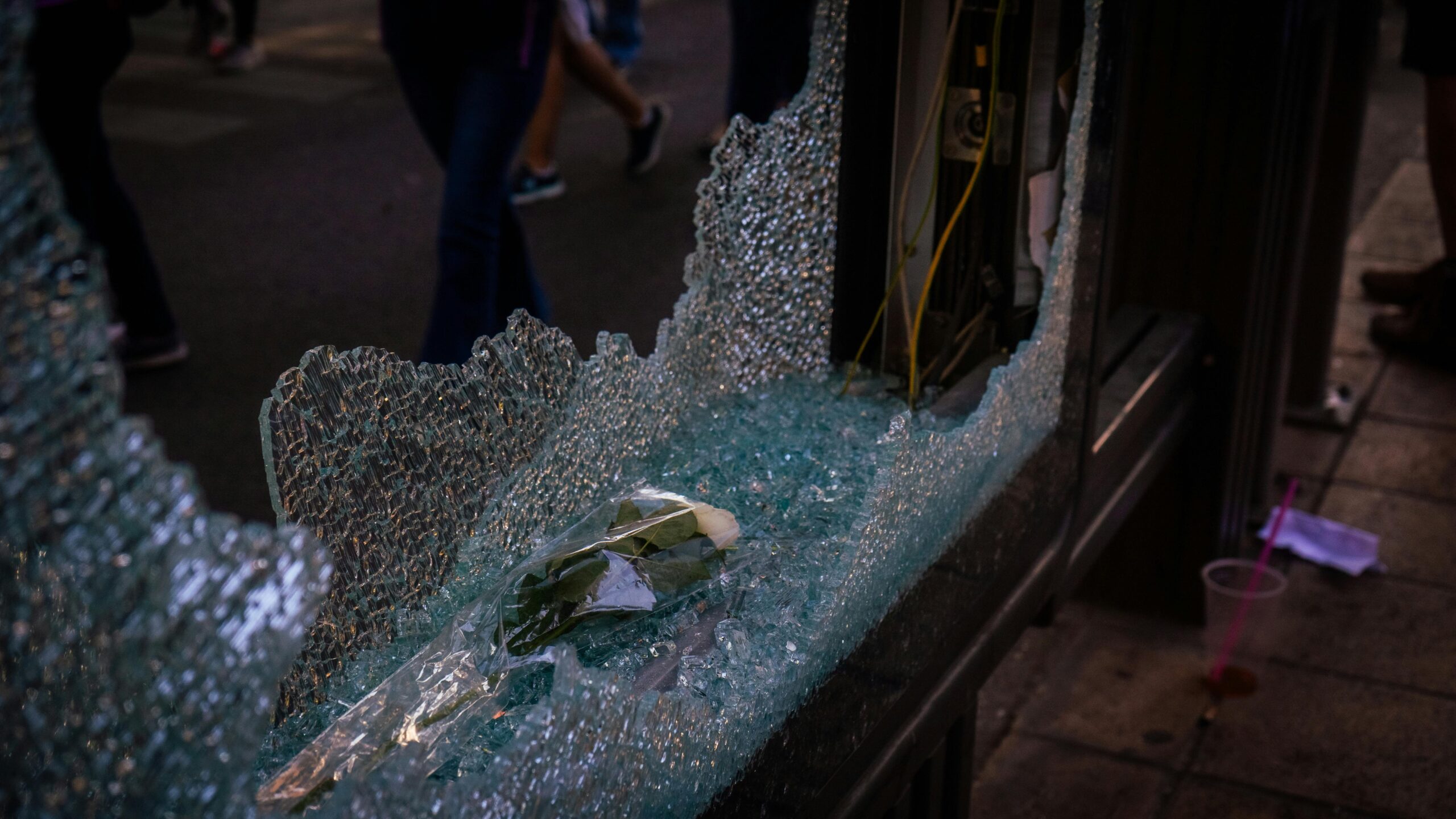
🌅 The New Reality Taking Shape
While it’s impossible to predict precisely what new reality will emerge from current upheavals, we can identify trends and possibilities taking shape. These include increasingly networked forms of organization that transcend traditional hierarchies, technologies that augment and potentially transform human consciousness, novel approaches to governance and decision-making that move beyond representational democracy, economic systems that value sustainability and wellbeing alongside productivity, and philosophical frameworks that integrate scientific understanding with meaning and purpose.
The new reality won’t be utopian—all systems have trade-offs, and new problems inevitably emerge alongside solutions to old ones. But it will be fundamentally different from what preceded it, shaped by different technologies, values, and possibilities. Whether it’s ultimately more just, sustainable, and conducive to human flourishing depends on choices being made now, in this liminal period.
We stand at a unique moment in human history, witnessing and participating in transformation at multiple scales simultaneously. The worlds we’ve known are indeed unraveling—not just one world, but many overlapping realities across different domains. This collapse creates space for something genuinely new to emerge, not merely a restoration of previous conditions but a reality configured around different principles and possibilities.
The chaos we’re experiencing isn’t the end of the story but the middle chapter—the necessary dissolution before reconstitution. How this chapter unfolds, and what reality emerges from the current upheaval, remains uncertain. But understanding the patterns of collapse and renewal across different scales and domains can help us navigate these turbulent times with greater wisdom, purpose, and hope. The death of old worlds is simultaneously the birth of new ones, and we’re privileged—and challenged—to witness and participate in this profound transformation. 🌟
