
Anúncios
In a world obsessed with completion and perfection, we often overlook the profound beauty found in unfinished works, evolving ideas, and the continuous process of creation itself.
🎨 The Paradox of Perfection in an Imperfect World
We live in an era where everything demands polish and completion. Social media showcases curated perfection, businesses push for flawless products, and our personal lives seem to require constant optimization. Yet this relentless pursuit of completion often blinds us to something more authentic and meaningful: the raw, unfinished beauty of things in process.
Anúncios
The concept of embracing the unfinished isn’t about accepting mediocrity or abandoning excellence. Rather, it’s about recognizing that creation is inherently dynamic, that evolution is more natural than stasis, and that some of the most profound beauty exists in the spaces between beginning and end. This perspective shifts our relationship with creativity, work, relationships, and even ourselves.
Historical Perspectives on Incomplete Masterpieces
Throughout history, some of humanity’s most celebrated works have remained technically unfinished. Michelangelo’s sculptures, particularly his “Prisoners” series, show figures emerging from raw marble blocks. These pieces weren’t abandoned in frustration but left in states that reveal the creative process itself. The partially carved stone tells a story that a completely polished surface never could.
Anúncios
Similarly, Franz Schubert’s Symphony No. 8, known as the “Unfinished Symphony,” stands as one of classical music’s most beloved compositions despite having only two movements instead of the traditional four. The incompleteness doesn’t diminish its power; if anything, it adds mystique and invites listeners to imagine what might have been while appreciating what is.
These examples remind us that completeness is often an arbitrary designation. Who decides when something is truly finished? The artist? The audience? Time itself? Perhaps the most honest answer is that nothing is ever completely finished—everything exists in a state of potential evolution.
The Creative Process: Where Magic Happens ✨
Anyone who has engaged seriously with creative work knows that the process itself often holds more vitality than the finished product. Writers speak of the excitement of drafting, when possibilities remain infinite. Painters describe the energy of initial sketches, before every decision has been made. Musicians find joy in improvisation, where the music continuously evolves.
This intermediate stage of creation carries a particular electricity. It’s messy, uncertain, and full of potential. Ideas branch in multiple directions. Mistakes become discoveries. The work breathes and changes, responding to new insights and influences. Once something is declared “finished,” this dynamic quality often calcifies into something static.
The Living Document Approach
In software development, the concept of continuous iteration has become standard practice. Products launch in beta, receive feedback, and evolve based on real-world use. This approach acknowledges that no initial version can anticipate every need or possibility. The product improves through use, feedback, and ongoing development.
This same philosophy can apply far beyond technology. Consider your personal goals, relationships, or creative projects as living documents—frameworks that evolve with experience rather than fixed endpoints to achieve. This mindset reduces pressure while paradoxically often leading to better outcomes because it allows for learning and adaptation.
🌱 Growth as a Perpetual State
Personal development culture often frames growth as a journey toward a better, more complete version of yourself. But what if you’re never “done” becoming who you are? What if the goal isn’t to reach some final, perfected self but to remain in a continuous state of evolution and discovery?
This perspective removes the anxiety of not being “there” yet, wherever “there” might be. You’re not incomplete or broken; you’re in process, which is exactly where every living thing should be. Trees never finish growing. Rivers never finish flowing. Ecosystems never stop evolving. Why should humans be any different?
Embracing your own unfinished nature means accepting that you’ll always have room to grow, new things to learn, and aspects of yourself yet to discover. This isn’t a failure—it’s the fundamental nature of being alive. The alternative to being unfinished is being dead, metaphorically if not literally.
The Wabi-Sabi Philosophy of Imperfection
Japanese aesthetics offer a beautiful framework for appreciating the incomplete through the concept of wabi-sabi. This philosophical approach finds beauty in imperfection, impermanence, and incompleteness. A cracked tea bowl, weathered wood, or asymmetrical flower arrangement exemplifies wabi-sabi—objects that bear the marks of time and use, telling stories through their imperfections.
Wabi-sabi stands in stark contrast to Western ideals of perfection and permanence. Where one culture might see a flaw to be corrected, wabi-sabi sees character and authenticity. This isn’t about lowering standards but about recognizing different types of value—the patina of age, the unique irregularities that make something distinctive, the honest evidence of lived experience.
Applying Wabi-Sabi to Modern Life
Incorporating wabi-sabi principles into contemporary life means resisting the compulsion to optimize everything. It means appreciating your aging body rather than constantly fighting against time. It means valuing handmade items with slight irregularities over mass-produced perfection. It means accepting that your home, your work, and your life can be beautiful without being polished.
This approach offers profound psychological benefits. When we stop demanding perfection from ourselves and our surroundings, we reduce stress and create space for authenticity. We can show our draft work, share our unfinished ideas, and present ourselves without the exhausting performance of having it all together.
🔄 The Power of Iteration and Revision
Every experienced creator knows that first drafts are rarely good. The magic happens in revision, in returning to work with fresh eyes and making it better. But revision is only possible when we accept that our initial efforts will be imperfect. If we demand perfection from the start, we often freeze, unable to begin at all.
The creative industries have long understood this principle. Writers produce multiple drafts. Designers create countless iterations. Scientists run repeated experiments. They don’t expect to get it right immediately; they expect to refine through repetition. Each version isn’t a failure—it’s a necessary step toward something better.
This iterative process values progress over perfection. It recognizes that you can’t revise a blank page, improve an unmade product, or perfect an unattempted skill. You must create something imperfect first, then make it better. The unfinished version isn’t inferior; it’s essential.
Digital Creation and the Myth of the Final Version
Digital technology has fundamentally changed our relationship with finished works. Unlike physical paintings or printed books, digital creations can be continuously updated. Websites evolve, software patches fix bugs, digital art files get refined, and even published articles can be corrected or expanded post-publication.
This fluidity challenges traditional concepts of completion. When is a website finished? When is software done? The honest answer is never—they’re maintained, updated, and improved as long as they’re used. This represents a shift from products to processes, from fixed objects to evolving services.
The Benefits and Challenges of Perpetual Beta
Living in “perpetual beta” offers flexibility and continuous improvement but can also create its own pressures. Without clear endpoints, how do you measure success? When do you stop tweaking and move to the next project? How do you avoid the trap of endless revision that prevents forward movement?
The key lies in distinguishing between productive evolution and counterproductive perfectionism. Productive iteration responds to feedback, adds value, and serves users or audiences. Counterproductive perfectionism chases an impossible ideal, adds minimal value, and serves anxiety rather than purpose.
💡 Unfinished Projects as Stepping Stones
We often view abandoned or incomplete projects as failures, sources of guilt cluttering our lives. But what if we reframed them as necessary explorations, learning experiences, or stepping stones to what comes next? Not every project needs to reach a traditional endpoint to have value.
That novel you started and stopped taught you about your writing process. The business idea you explored and abandoned helped clarify what you actually want. The relationship that didn’t work out showed you something important about yourself. These “failures” only fail if we refuse to extract their lessons and value their contributions to our evolution.
Giving yourself permission to leave things unfinished—intentionally and without guilt—can be liberating. Not every sketch needs to become a painting. Not every idea needs to become a business. Not every interest needs to become a career. Sometimes the value was in the exploration itself, not in producing a finished product.
The Collaborative Nature of Incompleteness
Unfinished works invite participation in ways completed works don’t. When something is polished and perfect, audiences can only consume it. When something retains rough edges and open questions, it invites others to contribute, interpret, and make it their own.
Open-source software exemplifies this beautifully. Projects explicitly remain unfinished, welcoming contributions from anyone who sees potential improvements. This collaborative incompleteness often produces better results than any single creator could achieve alone. The work evolves through collective intelligence and diverse perspectives.
Co-Creation in Art and Culture
Modern art increasingly embraces participatory elements, where the audience completes the work through their interaction. Installation art that changes based on viewer movement, choose-your-own-adventure stories, and user-generated content platforms all recognize that meaning emerges from the interaction between creator and audience.
This co-creative approach acknowledges that no creator fully controls how their work will be received, interpreted, or used. By intentionally leaving space for others, creators invite richer engagement and often discover meanings and applications they never imagined.
🌊 Accepting Life’s Inherent Incompleteness
Perhaps the ultimate invitation of embracing the unfinished is accepting that life itself is an incomplete project. We’re born into ongoing stories, we contribute our verses, and we exit while the story continues. We never see how everything turns out. We never reach a point where all questions are answered and all goals achieved.
This reality can feel frustrating or even tragic if we cling to narratives of completion. But it can also feel liberating if we shift perspectives. When we release the expectation of tying everything up neatly, we can engage more fully with the present moment. We can appreciate the current chapter without anxiously rushing toward an ending.
Mortality itself reminds us that we’re all unfinished works. No matter how much we accomplish, there will always be more we could have done, learned, or experienced. Rather than viewing this as depressing, we can see it as evidence that richness and possibility never run out. There’s always another question, another experience, another evolution ahead.
Practical Strategies for Embracing the Unfinished ⚡
Shifting from completion-obsession to process-appreciation requires intentional practice. Here are concrete approaches to cultivate this mindset:
- Share work-in-progress: Post drafts, sketches, or early versions of your creative work. Invite feedback before everything is polished.
- Set process goals instead of outcome goals: Rather than “finish the novel,” try “write for 30 minutes daily” or “complete one draft chapter weekly.”
- Keep a practice journal: Document your learning process, not just results. Celebrate progress and insights, not just completions.
- Create intentionally incomplete works: Make art that invites interpretation. Write stories with ambiguous endings. Design projects that others can build upon.
- Revisit old projects: Return to abandoned work with fresh eyes. You might find new value or decide it served its purpose and can rest.
- Practice letting go: Consciously finish some projects at “good enough” rather than perfect. Notice what happens when you release control.
The Beauty of Becoming Rather Than Being
Language reveals our cultural biases. We ask “what do you do?” rather than “what are you becoming?” We say “I am” rather than “I am currently.” These subtle linguistic choices emphasize fixed states over dynamic processes, being over becoming.
But existence is fundamentally about transformation. Cells regenerate. Knowledge expands. Relationships deepen or change. We’re never the same person we were years ago, or even yesterday. Recognizing this constant becoming helps us embrace the unfinished nature of everything, including ourselves.
When we shift from being to becoming, we trade the anxiety of inadequacy for the adventure of discovery. We’re not failing to arrive; we’re successfully journeying. We’re not broken and incomplete; we’re alive and evolving. This reframe transforms everything.
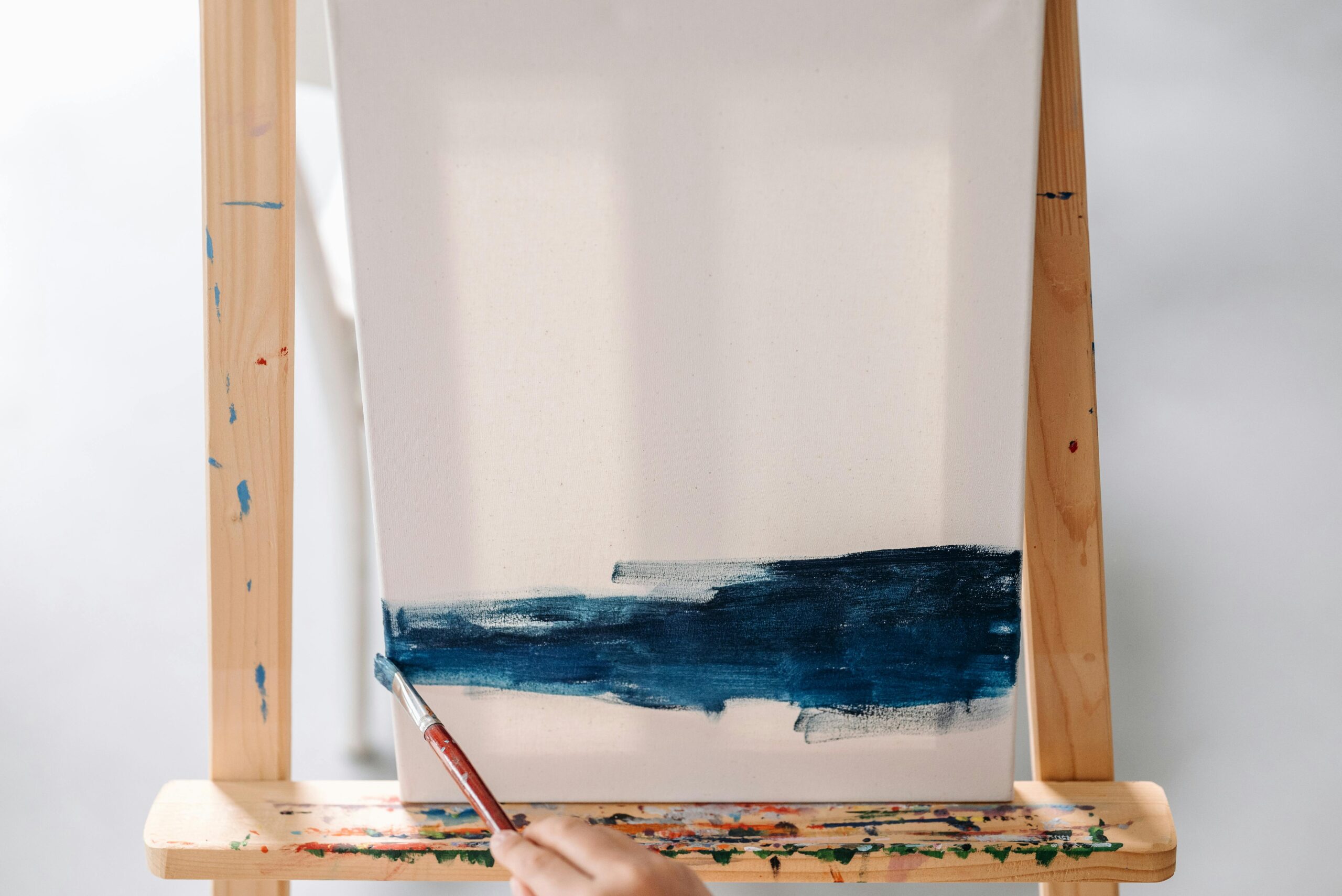
🎭 Finding Peace in the Perpetual Draft
Ultimately, embracing the unfinished isn’t about lowering standards or accepting mediocrity. It’s about recognizing that excellence itself is a moving target, that perfection is often the enemy of good, and that completion is frequently an arbitrary designation.
The most vibrant art, most innovative ideas, most authentic relationships, and most meaningful lives often retain elements of incompleteness—rough edges, open questions, room for growth. These aren’t flaws to be corrected but features to be appreciated.
When we give ourselves permission to be unfinished, we paradoxically become more complete—not in the sense of being done, but in the sense of being whole, authentic, and fully engaged with the continuous process of creation that defines existence itself.
So perhaps the invitation isn’t to finish everything we start, but to start truly appreciating where we are in the process—the beautiful, messy, ever-evolving middle, where all the real living happens.
