
Anúncios
Throughout human history, political forces have repeatedly shaped religious narratives, sometimes erasing entire deities from collective memory to serve earthly agendas.
🏛️ The Silent Erasure: When Gods Become Inconvenient
The relationship between religion and politics has always been intertwined, creating a complex tapestry where belief systems and power structures constantly negotiate their boundaries. What happens when a deity becomes politically inconvenient? History reveals a troubling pattern: gods who once commanded worship across vast territories can vanish from cultural consciousness within generations, their names reduced to footnotes or erased entirely from official records.
Anúncios
This phenomenon isn’t merely about the natural evolution of religious beliefs. Instead, it represents deliberate campaigns by ruling authorities to reshape spiritual landscapes according to political objectives. The forgotten gods of history weren’t abandoned by believers who simply lost faith—they were systematically removed through propaganda, persecution, and the rewriting of sacred texts.
Understanding how politics erases deities provides crucial insights into how power manipulates belief, controls narratives, and ultimately shapes human consciousness across centuries. These erasures reveal uncomfortable truths about the malleability of religious history and the extent to which authorities will go to consolidate their control over populations.
Anúncios
The Mechanics of Divine Deletion 📜
The process of erasing a deity from collective memory follows predictable patterns throughout history. Political authorities employ multiple strategies simultaneously to ensure complete removal of inconvenient religious figures from public consciousness.
Destroying Physical Evidence
The first step typically involves the systematic destruction of temples, shrines, statues, and religious artifacts. When physical spaces dedicated to worship disappear, the deity’s presence in daily life diminishes dramatically. Archaeological evidence shows countless instances where temples were deliberately demolished, their stones repurposed for government buildings, and their sacred spaces converted to serve the state religion.
Ancient inscriptions were chiseled away, manuscripts burned, and artwork destroyed. This wasn’t random vandalism but coordinated campaigns to eliminate every visual reminder of the targeted deity’s existence. Without physical touchstones, subsequent generations had no tangible connections to these forgotten gods.
Rewriting Sacred Narratives
Perhaps more insidious than physical destruction was the manipulation of religious texts themselves. Scribes working under political pressure would omit references to certain deities, merge them with more acceptable gods, or recast them as demons and evil spirits within revised cosmologies.
This textual manipulation proved especially effective because it didn’t just erase the deity—it actively vilified them. Future generations reading these modified texts would view the forgotten god not as a legitimate object of worship but as something dangerous, forbidden, or simply non-existent.
Criminalizing Worship Practices
Political authorities also enacted laws making worship of specific deities illegal, often punishable by death, imprisonment, or social ostracism. When practicing a religion becomes life-threatening, communities either abandon their beliefs, practice them in absolute secrecy, or flee to territories where they face less persecution.
These legal prohibitions created generational breaks in religious transmission. Parents stopped teaching children about forbidden deities to protect them from legal consequences, creating intentional gaps in cultural memory that proved impossible to repair once political winds shifted.
⚔️ Case Study: The Aten Revolution and Its Aftermath
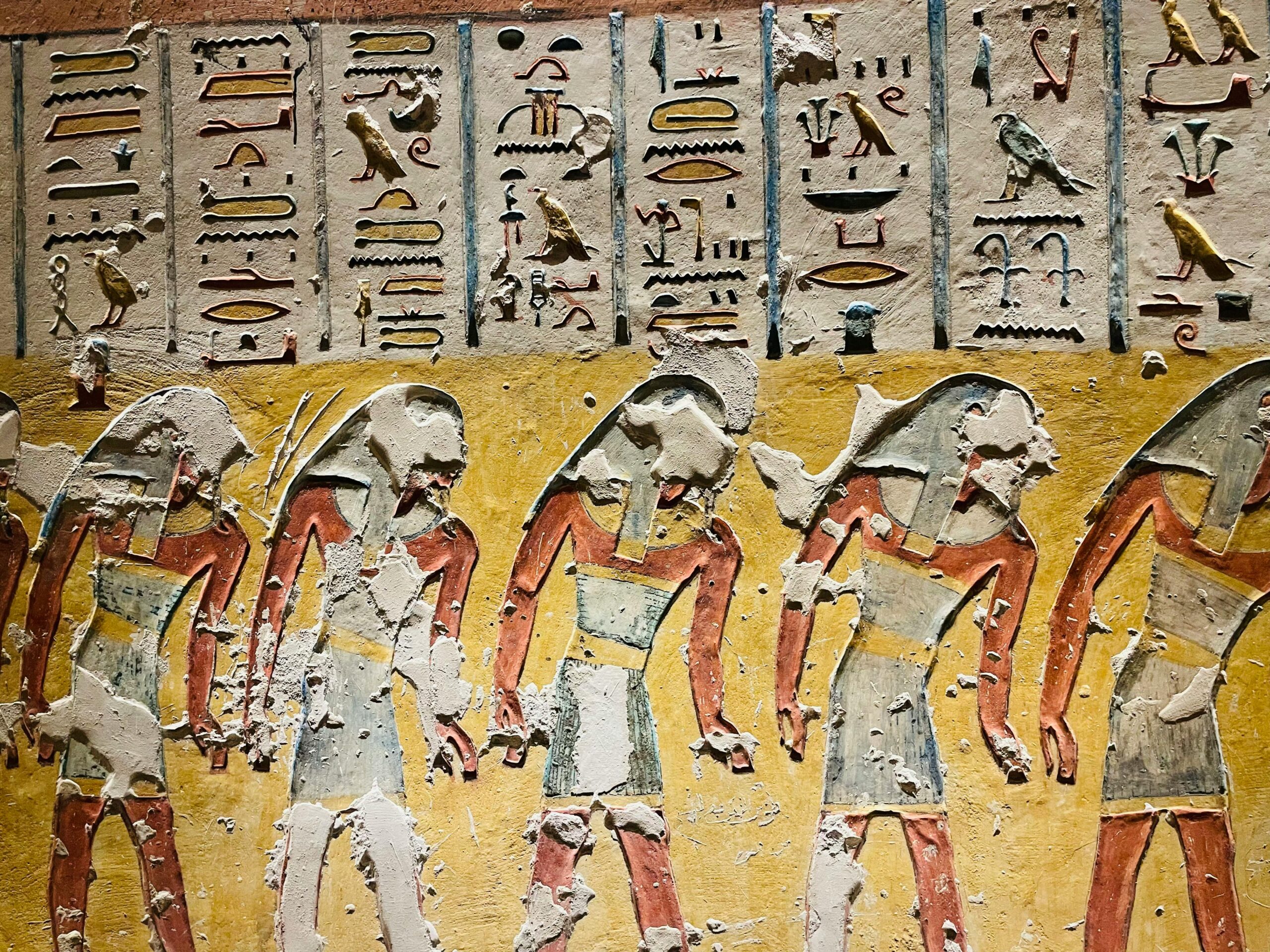
Ancient Egypt provides one of history’s most dramatic examples of political deity erasure. Pharaoh Akhenaten attempted to replace Egypt’s complex polytheistic system with monotheistic worship of Aten, the sun disk. This radical religious reform threatened the powerful priesthoods who derived wealth and influence from traditional gods.
During Akhenaten’s reign, temples to other gods were closed, their names chiseled from monuments, and resources redirected exclusively to Aten worship. However, after Akhenaten’s death, the political pendulum swung violently in the opposite direction.
His successors, particularly Tutankhamun and Horemheb, orchestrated one of history’s most thorough erasure campaigns. They didn’t just restore the old gods—they systematically eliminated virtually all evidence of Akhenaten’s reign and Aten’s brief supremacy. Akhenaten’s monuments were demolished, his name removed from king lists, and his religious texts destroyed.
For thousands of years, Akhenaten’s revolution was essentially forgotten. Modern archaeology only rediscovered this dramatic chapter of religious history in the 19th century. If not for surviving physical evidence buried in desert sands, we might never have known that Aten worship had briefly dominated one of history’s greatest civilizations.
The Christian Absorption of Pagan Deities 🕊️
The spread of Christianity across Europe and the Mediterranean provides numerous examples of political deity erasure, though often accomplished through absorption rather than outright destruction.
Strategic Syncretism
As Christianity became the Roman Empire’s official religion, political authorities faced a practical problem: populations deeply attached to traditional gods wouldn’t abandon them overnight. The solution involved strategic religious syncretism—absorbing pagan deities into Christian frameworks while gradually erasing their original identities.
Celtic, Germanic, and Slavic gods were recast as Christian saints with similar attributes. Pagan festivals were converted into Christian holy days, maintaining the celebration dates while changing their religious significance. Temple sites became churches, allowing communities to worship in familiar locations while slowly forgetting the deities previously honored there.
This gradual transformation proved politically brilliant. It minimized resistance while achieving the same end goal: the complete erasure of pagan deities from religious consciousness within a few generations.
The Lost Goddesses
Female deities faced particular erasure under Christian political expansion. Ancient Mediterranean and Near Eastern religions featured powerful goddesses—Asherah, Astarte, Isis, Cybele—who commanded widespread devotion. Christianity’s masculine divine hierarchy had no comparable roles for these feminine sacred figures.
The Virgin Mary absorbed some attributes of mother goddesses, but most simply vanished from religious consciousness. Political authorities saw goddess worship as particularly threatening, perhaps because it offered women religious authority and spiritual models that challenged emerging patriarchal structures.
Centuries of deliberate suppression meant that by medieval times, few Europeans remembered that their ancestors had worshipped divine feminine figures. This erasure represented not just religious transformation but fundamental reshaping of gender roles and social structures.
🌍 Colonial Erasures: Gods of Conquered Peoples
European colonialism initiated some of history’s most devastating campaigns of religious erasure, combining political domination with missionary zeal to eliminate indigenous belief systems across the Americas, Africa, Asia, and Oceania.
The Americas: Systematic Destruction
Spanish conquistadors deliberately destroyed Aztec, Maya, and Inca religious texts, smashed idols, and executed priests who refused conversion. This wasn’t merely about spreading Christianity—it was calculated political strategy to break indigenous resistance by destroying cultural foundations.
Diego de Landa, Spanish bishop in Yucatan, ordered the burning of Maya codices in 1562, destroying irreplaceable records of Maya religious beliefs, astronomical knowledge, and history. Only four codices survived this deliberate cultural annihilation. Countless deities worshipped for centuries became forgotten within generations.
Similar patterns repeated across the Americas. Indigenous gods were declared demons, their worship criminalized, and practitioners punished. Political authorities understood that controlling religion meant controlling populations, making spiritual conquest inseparable from territorial conquest.
Africa and the Slave Trade
The transatlantic slave trade created additional layers of religious erasure. Enslaved Africans were forcibly converted to Christianity and forbidden from practicing traditional religions. Political and economic systems depended on breaking cultural connections that might fuel resistance.
Despite this oppression, African deities survived through syncretism, disguised as Catholic saints in traditions like Santería, Candomblé, and Vodou. However, many others were indeed forgotten, their names and attributes lost as enslaved populations were systematically stripped of cultural memory.
🔍 Archaeological Resurrections: Rediscovering Lost Gods
Modern archaeology and historical research have begun recovering some erased deities, revealing the extent of political manipulation in religious history.
Asherah: The Erased Consort
Perhaps no deity’s political erasure is more documented than Asherah, who archaeological evidence suggests was worshipped alongside Yahweh in ancient Israel. Biblical texts contain traces of her presence, though later editors attempted to remove these references.
Inscriptions discovered at Kuntillet Ajrud and Khirbet el-Qom mention “Yahweh and his Asherah,” suggesting she was considered God’s consort in popular Israelite religion. However, religious reformers during the monarchic period conducted campaigns against Asherah worship, destroying her sacred poles and eliminating her from official theology.
This erasure served political purposes: consolidating power around Jerusalem’s temple, strengthening monotheistic claims, and reducing rival religious sites’ influence. Asherah’s disappearance from Jewish and later Christian consciousness was so complete that until 20th-century archaeological discoveries, few scholars suspected her significant role in ancient Israelite religion.
Mithras: The Rival to Christianity
Mithraism rivaled early Christianity throughout the Roman Empire, particularly among soldiers and merchants. Mithraic temples existed across Roman territories, and the religion’s mysteries attracted devoted followers for centuries.
Yet when Christianity gained political dominance, Mithraism was systematically suppressed. Temples were destroyed or converted to Christian use, practitioners persecuted, and sacred texts eliminated. The religion’s secretive nature meant little written record existed to preserve its beliefs.
Today, Mithras is largely forgotten outside academic circles. Most people have never heard of this god who once commanded devotion from thousands across the ancient world. His erasure demonstrates how completely political forces can eliminate even popular deities from cultural memory.
📚 The Politics of Religious Memory
Understanding deity erasure reveals important truths about how political power operates through controlling narratives and shaping collective memory.
Memory as Political Tool
Political authorities have always understood that controlling what populations remember and forget is fundamental to maintaining power. Religious beliefs deeply shape cultural identity, moral frameworks, and social structures. Erasing inconvenient deities allows rulers to reshape these foundations according to their political objectives.
When a deity disappears from collective memory, so do the values, practices, and social arrangements associated with that god’s worship. This creates space for authorities to introduce new religious frameworks that better serve their interests.
The Winner’s History
Religious history is inevitably written by victors. Dominant religious traditions preserve their narratives while erasing or distorting the stories of defeated faiths. What we think we know about ancient religions often reflects political outcomes rather than historical realities.
This means our understanding of human spirituality is fundamentally incomplete. We see only what political forces allowed to survive, creating a distorted picture of religious history that favors certain traditions while rendering others invisible.
💭 Modern Implications: Gods Still Being Forgotten
The political erasure of deities isn’t merely historical—similar processes continue today, though often in subtler forms.
Globalization and Religious Homogenization
Modern globalization pressures indigenous and minority religions, creating conditions where traditional deities risk erasure without overt political persecution. When young people migrate to cities, adopt dominant cultures, or convert to majority religions for economic advantages, traditional gods lose devotees.
This represents a quieter form of political erasure, driven by economic and social structures rather than explicit persecution. Yet the result remains the same: deities worshipped for generations disappear from human consciousness within a few decades.
Digital Memory and Religious Preservation
Conversely, digital technology offers unprecedented opportunities to preserve religious diversity and prevent deity erasure. Online archives document endangered religious traditions, creating records that survive even if living practices disappear.
This represents a fundamental shift in humanity’s ability to maintain religious memory. Political authorities can no longer erase deities as completely as in previous eras, since digital records exist beyond any single government’s control.
🌟 Recovering What Was Lost: The Importance of Religious History
Studying erased deities matters not just for historical accuracy but for understanding how power operates, how beliefs shape societies, and how political forces manipulate both.
Recovering forgotten gods challenges dominant narratives, reveals suppressed histories, and demonstrates the diversity of human spirituality. It reminds us that current religious landscapes resulted from political processes, not inevitable spiritual evolution.
This knowledge empowers critical thinking about contemporary religious and political claims. When we understand how thoroughly authorities erased deities in the past, we approach current religious narratives with appropriate skepticism, questioning whose interests these narratives serve and what alternatives have been suppressed.
Lessons From the Shadows of Forgotten Altars ⚱️
The forgotten gods of history whisper important warnings across the centuries. They remind us that no belief system is immune to political manipulation, that even the most deeply held convictions can be erased within generations when power demands it, and that religious “truth” often reflects political victories rather than spiritual certainties.
These erased deities also testify to human resilience. Despite centuries of suppression, traces survive in archaeological records, linguistic remnants, and syncretized traditions. Memory proves harder to eliminate than authorities hope, creating cracks through which suppressed histories eventually emerge.
As we move forward, understanding this history becomes increasingly important. In an age of rapid cultural change, renewed religious conflicts, and sophisticated propaganda, recognizing how political forces shape religious consciousness helps us resist manipulation and preserve spiritual diversity.
The gods may be forgotten, but the patterns that erased them remain active. Only by remembering what was lost can we protect what remains and ensure that future generations inherit a complete rather than politically curated understanding of human spirituality and its complex relationship with power.
