
Anúncios
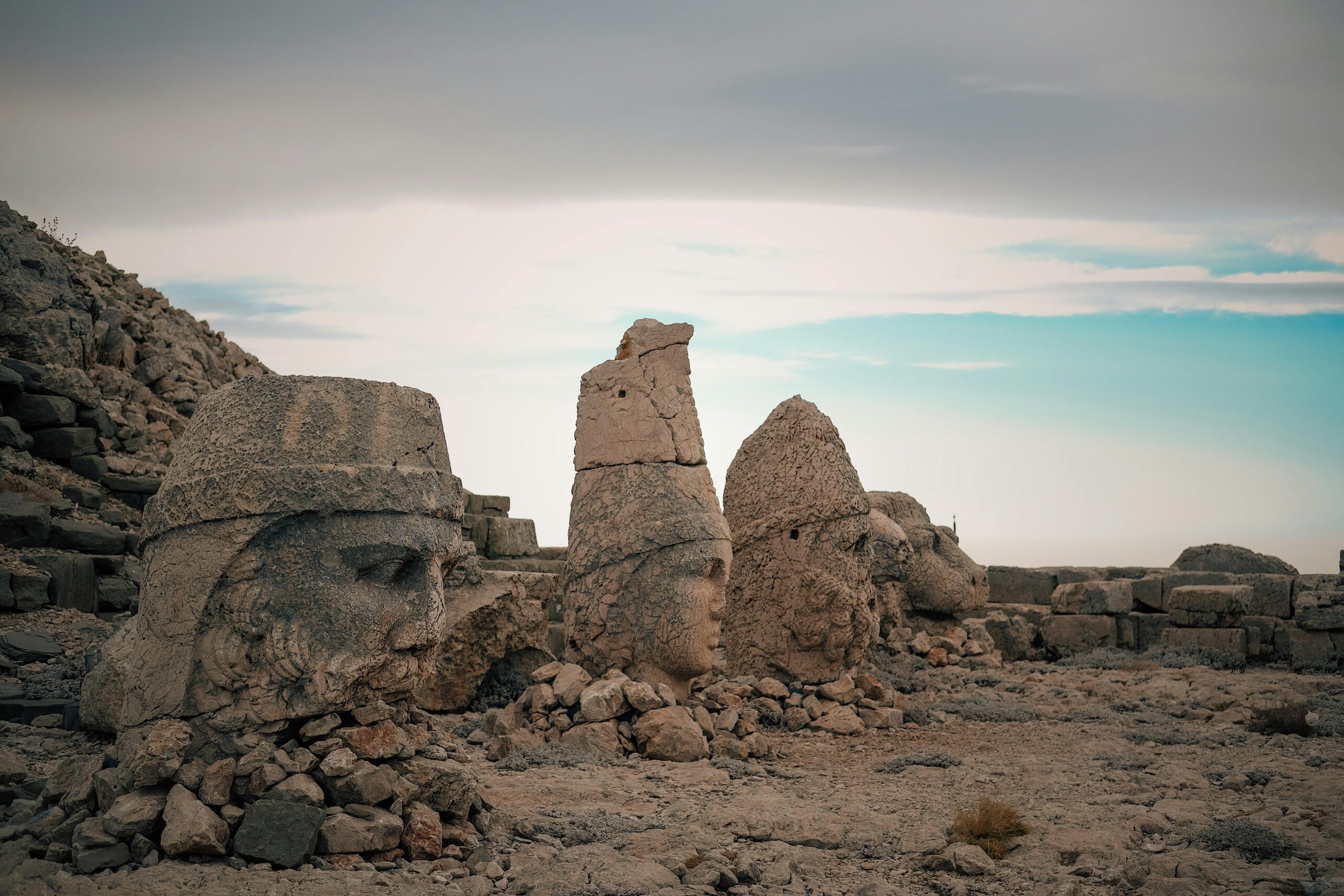
Throughout history, countless deities have vanished from human memory, their temples crumbling, their names forgotten, and their mysteries buried beneath layers of time and dust.
🏛️ The Shadows of Forgotten Divinity
The ancient world was a tapestry of gods and goddesses, each civilization contributing its own pantheon to the collective spiritual consciousness of humanity. Yet for every Zeus, Ra, or Odin whose stories survived millennia, dozens of other deities slipped silently into oblivion. These lost gods represent more than mere mythological curiosities—they embody entire worldviews, cultural values, and spiritual practices that once shaped the lives of millions.
Anúncios
Archaeological discoveries continue to reveal tantalizing fragments of these forgotten faiths. A weathered inscription here, a broken statue there, each artifact whispers of divine beings whose worship once filled grand temples with incense and prayer. The process of rediscovering these lost deities is akin to assembling a cosmic puzzle with most pieces missing, relying on context, comparative mythology, and occasional strokes of scholarly luck.
Why Gods Disappear: The Mechanisms of Divine Erasure
The disappearance of deities from human consciousness rarely occurs suddenly. Instead, it unfolds through a complex interplay of cultural, political, and religious forces that span generations or even centuries. Understanding these mechanisms helps us appreciate both what was lost and how precarious the preservation of cultural memory truly is.
Anúncios
Conquest and Religious Suppression
When empires expanded and conquered neighboring territories, victorious civilizations often systematically dismantled the religious infrastructure of defeated peoples. Temples were demolished, priests were scattered or executed, and sacred texts were destroyed. The Roman persecution of various regional cults, the Spanish conquest of Mesoamerica, and the Christian suppression of European pagan traditions all resulted in the wholesale erasure of divine beings from active worship.
Sometimes this erasure was deliberate and violent. Other times, it occurred more subtly through syncretism, where conquered deities were absorbed into the victor’s pantheon, transformed beyond recognition, or demoted to mere demons or folk spirits. The original deity essentially died, even if echoes persisted in altered forms.
Cultural Evolution and Changing Values
Not all divine disappearances resulted from external violence. Sometimes civilizations simply outgrew their gods. As societies evolved, developed new technologies, or encountered different philosophical frameworks, certain deities lost relevance. A fertility goddess might fade when agricultural practices changed, or a war god might diminish as a culture embraced pacifism or different military strategies.
Economic transformations also played crucial roles. Trade deities flourished along prosperous commercial routes but vanished when those routes collapsed. Mining gods were forgotten when mineral deposits were exhausted and communities relocated. The gods’ fates were inextricably tied to the material realities of their worshippers’ lives.
Case Studies in Divine Disappearance 📜
The Mysterious God of Göbekli Tepe
Perhaps no archaeological site better exemplifies the mystery of lost deities than Göbekli Tepe in modern Turkey. Dating to approximately 9600 BCE, this megalithic complex predates Stonehenge by over 6,000 years and the Egyptian pyramids by roughly 7,000 years. Its massive T-shaped pillars, some weighing over 10 tons and carved with enigmatic animal figures, clearly served a religious purpose.
Yet we have no names for the deity or deities worshipped there. We possess no myths, no prayers, no liturgical calendar. The people who gathered at Göbekli Tepe left behind architectural grandeur but no written records to explain their spiritual beliefs. Scholars can only speculate based on iconography and comparative analysis with later cultures. This nameless god—or gods—represents perhaps the ultimate lost deity, powerful enough to inspire monumental construction yet completely erased from human memory.
Velchanos: Crete’s Forgotten Divine Youth
Before Zeus dominated Greek religious consciousness, the island of Crete worshipped its own distinct deities. Among these was Velchanos, a youthful god associated with renewal, vegetation, and possibly the famous Cretan bull. Inscriptions and artistic representations suggest he was significant in Minoan and early Greek Cretan religion.
As mainland Greek culture absorbed and transformed Cretan traditions, Velchanos gradually merged with Zeus, losing his distinct identity. By the Classical period, few Greeks remembered him as a separate deity. Only through careful archaeological work and epigraphic analysis have modern scholars rescued Velchanos from complete oblivion, reconstructing fragments of his worship and attempting to understand what made him meaningful to ancient Cretans.
The Vanished Gods of Pre-Islamic Arabia
Before Islam unified the Arabian Peninsula under monotheism, the region hosted a diverse array of deities. Beyond the well-known al-Lat, al-Uzza, and Manat, numerous local gods and goddesses received worship at various shrines and sacred sites. Many of these deities are known to us only through brief mentions in early Islamic texts, which naturally viewed them as false idols rather than subjects worthy of detailed documentation.
The rapid and thorough Islamization of Arabia meant that within a few generations, detailed knowledge of these pre-Islamic gods vanished almost completely. Their mythologies, rituals, and theological significance were lost, leaving modern scholars with tantalizing but frustratingly incomplete fragments. These gods represent a case where religious transformation was so complete that reconstruction becomes nearly impossible.
Methodologies for Divine Recovery 🔍
Archaeological Evidence and Material Culture
The primary tools for rediscovering lost deities are archaeological. Every excavation potentially yields new information: dedicatory inscriptions naming forgotten gods, ritual objects indicating worship practices, temple foundations revealing sacred architecture, and artistic representations showing divine iconography. Even mundane items like pottery shards can bear divine names or symbols that expand our understanding.
Advanced technologies have revolutionized this process. Ground-penetrating radar reveals buried structures without excavation. Satellite imagery identifies potential archaeological sites across vast territories. Chemical analysis of residues on pottery fragments can indicate ritual offerings, suggesting the nature of the deity worshipped. Digital reconstruction allows scholars to virtually restore damaged artifacts, revealing details invisible to the naked eye.
Comparative Mythology and Linguistic Analysis
When direct evidence is scarce, scholars turn to comparative methods. If a fragmentary inscription mentions a deity whose functions are unclear, comparison with similar gods in related cultures can provide insights. Linguistic analysis of divine names often reveals etymological connections suggesting the deity’s original nature or functions.
For instance, the Proto-Indo-European root *dyēus (meaning “sky” or “shine”) appears in various forms across Indo-European languages: Zeus (Greek), Jupiter (Roman), Dyaus Pita (Vedic), and Tyr (Norse). By tracing these linguistic connections, scholars can reconstruct aspects of deities worshipped by cultures that left no written records. The methodology isn’t foolproof—cultural borrowing and parallel evolution can create false connections—but it remains invaluable for studying lost gods.
Folklore and Survival in Degraded Forms
Sometimes lost deities survive in disguised forms within later traditions. A forgotten goddess might persist as a fairy queen in medieval folklore, a demon in monotheistic traditions, or a saint in syncretistic Christianity. Careful analysis of folk traditions, fairy tales, and local customs can reveal these hidden survivals.
In Lithuania, which remained pagan until the 14th century, many pre-Christian deities survived in folk memory even after official conversion. Scholars studying Lithuanian folklore in the 19th and 20th centuries could reconstruct aspects of Baltic paganism that had been lost in neighboring regions that Christianized earlier. Similar processes have helped recover information about Celtic, Slavic, and Norse deities whose worship ended centuries or millennia ago.
The Cultural Significance of Lost Deities ✨
Windows into Vanished Worldviews
Each lost deity represents a unique lens through which ancient peoples understood existence. Their attributes, mythologies, and worship practices reflected the values, fears, hopes, and environmental realities of their worshippers. By recovering these gods, we gain access to otherwise inaccessible aspects of human cultural diversity.
A forgotten harvest deity tells us about agricultural practices, seasonal observations, and the relationship between humans and the natural world in that specific context. A lost warrior god reveals attitudes toward violence, courage, honor, and social organization. An erased healing divinity illuminates medical knowledge, theories of disease, and the intersection of physical and spiritual wellbeing. Each recovery enriches our understanding of human cultural possibilities.
Challenging Religious Narratives
The rediscovery of lost deities often complicates simplified narratives about religious history. Rather than smooth progressions from “primitive” polytheism to “advanced” monotheism, we discover complex patterns of interaction, resistance, synthesis, and loss. We see that religious change often involved violence, suppression, and the erasure of marginalized voices.
These recoveries can also reveal surprising continuities. Elements we consider distinctly “Jewish,” “Christian,” or “Islamic” sometimes have roots in earlier traditions whose gods we’ve only recently rediscovered. This doesn’t diminish later religions but rather situates them within the broader tapestry of human spiritual creativity, showing how new traditions build upon and transform older foundations.
Modern Reconstruction and Neo-Pagan Revival
The academic rediscovery of lost deities has inspired modern religious reconstruction movements. Neo-pagans, reconstructionists, and spiritual seekers have attempted to revive worship of gods whose cults ended centuries or millennia ago. These movements raise fascinating questions about authenticity, cultural appropriation, and the nature of religious continuity.
The Challenge of Authentic Revival
Can a deity truly be revived after centuries of absence? Modern practitioners of reconstructed religions face enormous gaps in knowledge. We might know a god’s name and basic attributes but lack the prayers, rituals, sacred calendar, and lived experience that gave worship meaning. Modern reconstructionists must therefore engage in creative interpretation, filling gaps with educated guesses, personal inspiration, or borrowing from better-documented traditions.
Critics argue this produces something fundamentally new rather than a genuine revival. An ancient Celt and a modern Celtic reconstructionist live in radically different worlds with different assumptions, technologies, and social structures. The “same” deity worshipped in both contexts would necessarily mean different things. Supporters counter that religions always evolve and that sincere engagement with divine forces matters more than perfect historical accuracy.
Cultural Context and Responsibility
The revival of lost deities also raises questions about cultural ownership and respect. When academics or spiritual seekers from dominant cultures “rediscover” the gods of colonized, suppressed, or destroyed peoples, power dynamics come into play. Is it appropriate for a European to revive indigenous American deities, or a Christian-background seeker to reconstruct Middle Eastern gods whose worship was violently suppressed?
There are no easy answers, but many modern practitioners emphasize respectful engagement, acknowledging historical injustices, and recognizing that they cannot simply claim traditions to which they have no organic connection. The conversation continues as more lost deities emerge from obscurity and more people feel called to engage with ancient spiritual practices.
Digital Technologies and Future Discoveries 💻
As technology advances, our capacity to recover lost deities expands dramatically. Artificial intelligence can analyze massive databases of inscriptions, identifying patterns and connections humans might miss. Advanced imaging techniques reveal erased or damaged texts on ancient manuscripts, potentially recovering lost mythological material. Crowd-sourced archaeology enlists thousands of volunteers to scan satellite imagery for undiscovered sites where forgotten gods might have been worshipped.
Three-dimensional scanning and printing allow perfect replicas of fragile artifacts to circulate among researchers worldwide. Virtual reality reconstructions let scholars and interested laypeople “visit” ancient temples as they might have appeared millennia ago. These technologies democratize access to materials once restricted to specialists and accelerate the pace of discovery and analysis.
Climate change, ironically, may also contribute to discoveries. Melting glaciers reveal artifacts preserved in ice for millennia. Shifting coastlines expose submerged settlements. While these environmental changes are tragic, they occasionally provide unprecedented access to the past, potentially revealing evidence of deities we never knew existed.
The Eternal Cycle of Remembering and Forgetting 🌙
The story of lost and rediscovered deities reminds us that cultural memory is fragile. What seems permanent and unshakeable in one generation can vanish within a few centuries. The gods who dominated ancient consciousness, whose temples were maintained at enormous expense, whose festivals structured the year, and whose myths shaped moral understanding could be completely forgotten.
Yet the story also demonstrates humanity’s remarkable capacity for recovery and reconstruction. Even when deliberate erasure attempts to permanently delete gods from human memory, fragments survive. Patient scholarship, technological innovation, and sometimes sheer luck allow us to glimpse what was thought lost forever. We cannot fully restore these vanished deities—the living traditions that sustained them are gone—but we can honor them by seeking to understand what they meant to their worshippers.
As we continue uncovering lost deities, we’re reminded that our own cultural products are equally vulnerable to future oblivion. What we consider essential and permanent might mystify or bore future generations. This humbling realization connects us across millennia with the anonymous worshippers of forgotten gods, all of us reaching toward transcendence with the materials our specific moments provide, all of us subject to time’s relentless erosion.
The mysteries unveiled by rediscovering lost deities are ultimately mysteries about ourselves—about human creativity, spirituality, cultural fragility, and our endless quest to understand existence through connection with forces greater than ourselves. Each recovered god enriches our collective heritage, expanding our understanding of what it means to be human across time, geography, and belief.
